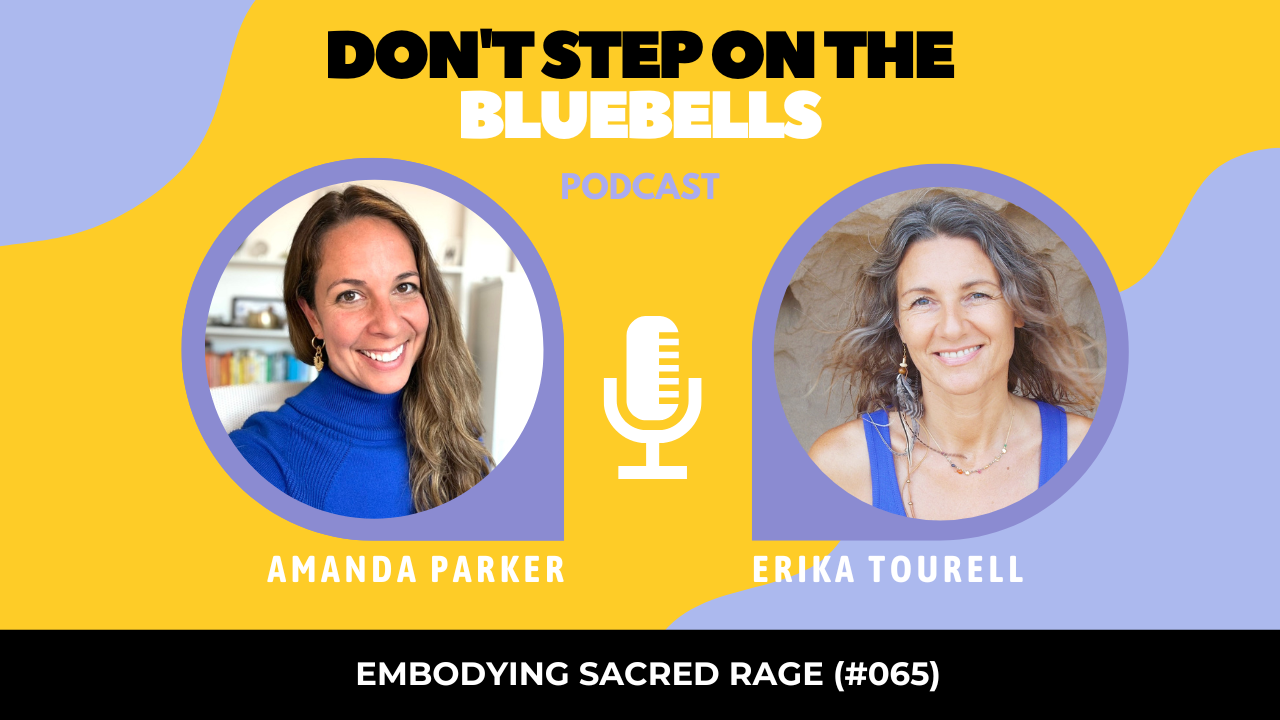
#065 Embodying Sacred Rage with Erika Tourell
Listen to full episode
Somatic trauma therapist, tantra practitioner and ceremonialist, Erika Tourell, joins Amanda to explore sacred rage as a life force, what happens when we suppress our anger, and how channeling our deepest fury can unlock our creativity, our purpose, and our power.
Read the full Show Notes below!
Subscribe Now
“It’s a nervous system flex. That’s why I feel it’s so important to teach people about the nervous system because you can definitely get stuck in survival and lack and scarcity.”
Today's Guest
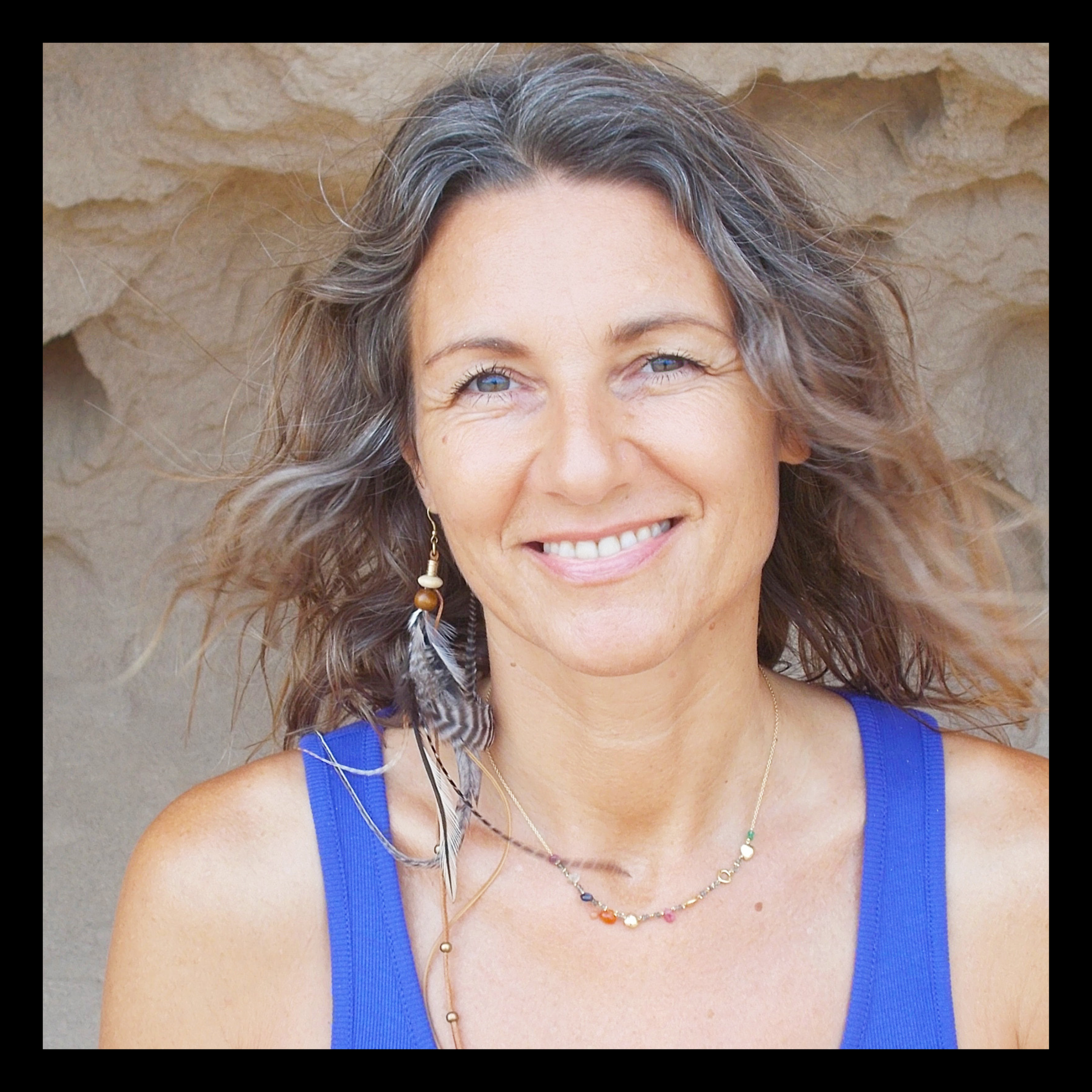
Erika Tourell
Erika Tourell is a seeker of truth and meaning. As a tantra yoga teacher, breath worker, somatic trauma therapist, relational coach and ceremonialist, she has spent the last four decades studying and putting into practice what has supported her own path of healing and complex trauma recovery. She creates a sanctuary for profound transformation by honouring the sacred spirit within. Inspired by the deep, resonant connection between the natural world and the human body, her work is a unique alchemy weaving ancient wisdom with trauma-informed somatic tools. She empowers you to reclaim your innate wholeness and rediscover a vibrant sense of pleasure, joy and aliveness.
How to get in touch:
Website: https://www.erikatourell.com/
Instagram: @erikatourell_ecosomatics
Listen to the episode on
Show Notes
What if the rage you've spent your whole life trying to suppress is actually one of your greatest gifts? In this extraordinary conversation, somatic trauma therapist and tantra practitioner Erika Tourell takes us deep into the territory most of us have been taught to fear — our anger, our grief, and the raw, electric charge of our own life force. This isn't a conversation about becoming a calmer, more managed version of yourself. It's an invitation to reclaim the fire.
Erika brings nearly 40 years of healing work to this conversation — from holistic bodywork at 19, through four years across India, Thailand, Bali and beyond, to her own reckoning with menopause, developmental trauma, and the shattering realisation that healing isn't just personal. It's political. She speaks with rare honesty about her own journey through depression, functional freeze, a Kundalini-like menopause, and how it led her to understand that the missing piece of her own healing — and perhaps ours — was the somatic piece: the body's wisdom, the nervous system's intelligence, and the power of community.
The heart of this episode is sacred rage — what it is, why we've been so thoroughly taught to deny it, and what becomes possible when we stop. Erika unpacks the link between suppressed anger and chronic illness, between our rage and our creativity, between our deepest fury and our most sacred calling. She offers real practices for moving the charge through the body — breath, movement, voice — and makes the case that learning to channel this energy is not just healing work, it's world-changing work.
This episode ends with a vision that will stay with you: that each of us, in healing our own nervous system and stepping into our gifts, is participating in what Joanna Macy calls "the great turning." The time is now. The time is yesterday.
Key Takeaways
Sacred rage is life force — when you suppress it, you dim your creativity, aliveness and purpose along with it.
Suppressed anger lives in the body: the liver, the jaw, the pelvic floor — and eventually shows up as illness.
Healing isn't just personal — the systems around us are woven into our nervous systems too.
The things that enrage you most point directly to the values you care about most — and your calling.
We cannot heal alone; the nervous system co-regulates with others, and community is a biological necessity.
What We Talked About
Erika's origin story — growing up with an abandonment wound, being raised by her father, and discovering healing work at 19
Four years across Thailand, India, Bali and Malaysia — and how that journey shaped her path
Motherhood at 28 as a threshold crossing from maiden to mother, and the Saturn return
What somatic trauma therapy actually is — top-down and bottom-up healing, nervous system education, and the power of safety
The missing piece — how the pandemic led Erika to confront her own unresolved trauma and discover the systemic layer of healing
Menopause as a Kundalini awakening — a baptism of fire, a reckoning, and a portal into elderhood
Our death-denying culture and the profound gift of a death practice — including a Buddhist death reflection meditation and pseudo-death rituals
Sacred rage — what it is, where it lives in the body, and why we've been trained to fear it
How to work with anger in real time: breath, movement, sound, the unsent letter, and dancing it out
Rage as a catalyst for community, activism, and the great turning — from personal healing to collective transformation
Guest Quotes
"I help people heal from systemic, intergenerational and personal trauma to reclaim their joy, their agency, their sovereignty and find a pathway to true love, true self-love."
"It's like reclaiming that Eros, that innocence and the aliveness."
"The missing piece of the puzzle was the trauma piece."
"Realizing it's not an individual problem — we can be living these hyper individualistic lives and then finding all this stuff out and it's like, my goodness, where's the community? I need community. I need the village in order to be able to heal."
"For a lot of people, it hasn't been a safe place to actually be in their bodies."
"Everything is invitational, giving people this possibility to feel something."
"We haven't really been allowed to have desires. We haven't been allowed to have needs."
"Estrogen goes down, which is like the people pleasing hormone."
"The menopause has been likened to a Kundalini awakening. It's like a baptism of fire."
"Whatever hasn't been healed yet, if there's any trauma that still isn't resolved in your body, in your system, it's going to come up in menopause. It's a time of reckoning."
"Our grief connects us, shows us how deeply we love and how deeply we care."
"We live in a death denying and grief denying culture. There's no space for grief."
"There's so much power in our rage and anger. And that's the thing that we want to truly harness because I think our sacred rage is also connected to our sexuality."
"When we shut all of that down, we kind of pour water on the fire and then nothing gets — it kind of festers, we get bitter and resentful and jealous."
"Energy is emotion — energy and motion, you need to move it through your system."
"We say that anger lives in the liver. And also anger lives in the jaw."
"For hundreds of years, women and men were killed for their wisdom and their magic. So I totally understand why women don't feel safe to actually step up and bring their voice."
"It's a nervous system flex. That's why I feel it's so important to teach people about the nervous system because you can definitely get stuck in survival and lack and scarcity."
"The time is now, the time is yesterday. Bring your gifts, we need them right now."
"Everything starts from the inside out. Change, you become the change that you want to see in the world."
"We're a part of this collective nervous system. I affect you and you affect me. And if we can just raise up, raise ourselves up — we create that baseline of abundance and calm and love."
"Doing everything that we can just to be a walking embodiment of love."
Resources to Learn More
Louise Hay — You Can Heal Your Life — https://www.hayhouse.com/you-can-heal-your-life-paperback
Shirley MacLaine — Out on a Limb (and other autobiographies) — https://www.penguinrandomhouse.com/books/105672/out-on-a-limb-by-shirley-maclaine/
Sogyal Rinpoche — The Tibetan Book of Living and Dying — https://www.rigpa.org/tibetan-book-of-living-and-dying
Carlos Castaneda — author and teacher — https://www.goodreads.com/author/show/8088.Carlos_Castaneda
Joanna Macy — The Great Turning — https://www.joannamacy.net/thegreatturning.html
Erika's program: Cherish — a women's self-love journey covering nervous system work, somatics and self-love practices — https://www.erikatourell.com/onetoone
Terms & Tools to Dig Deeper
Abandonment wound — A core emotional wound stemming from early experiences of being left or rejected, often by a primary caregiver; can drive hypervigilance, people-pleasing and difficulty with attachment in adult relationships.
Dantien — An energy centre in the lower belly (also written Dan Tian) in Taoist and Chinese medicine traditions; considered a source of vital energy and creative power.
Death Reflection Meditation — A Buddhist contemplative practice of meditating on one's own death to cultivate presence, gratitude and peace; referenced in The Tibetan Book of Living and Dying.
Developmental trauma / Complex childhood trauma — Trauma arising from repeated or prolonged adverse experiences in childhood (such as neglect, abandonment, or instability), which shapes the developing nervous system.
Eros — In Erika's usage, not merely sexuality but the full life force: the animating aliveness, curiosity, wonder and creative energy we are born with and can reclaim.
Family Constellations — A therapeutic approach developed by Bert Hellinger that explores how family patterns and systemic dynamics (including ancestral trauma) play out in an individual's life.
Fawn response — A trauma response (alongside fight, flight and freeze) involving appeasement, people-pleasing and self-erasure to avoid threat or conflict.
Functional freeze — A nervous system state where a person appears to be functioning normally but is internally shut down or disconnected; associated with chronic trauma responses.
Grief tending — The practice of creating intentional space for grief to be felt, witnessed and expressed, rather than suppressed or rushed through; Erika facilitates grief tending spaces as part of her work.
Intergenerational trauma — Trauma that is passed down through families and communities, often through nervous system patterns, behaviours and relational dynamics, across generations.
Kundalini awakening — In yogic tradition, the rising of a powerful spiritual energy (Kundalini) from the base of the spine; can be catalysed by intense life experiences. Erika likens menopause to this process.
Menopause as a death portal — Erika's framing of menopause not as a medical event but as a profound life threshold — a time of reckoning, grief, rage, and ultimately rebirth into elderhood.
Moon circles — Gatherings (in Erika's case, online, every new and full moon) for women to come together, share, move, breathe and mark the lunar cycle; a form of community ritual and nervous system support.
Nervous system regulation / co-regulation — The process of calming or activating the nervous system, either through one's own practices (self-regulation) or in relationship with others (co-regulation); central to Erika's therapeutic approach.
Pseudo-death ritual — An experiential practice in which participants imaginatively engage with their own death — sometimes including lying in a symbolic grave — as a way to confront mortality, clarify values, and generate aliveness.
Sacred rage — The concept at the heart of this episode: the idea that anger and rage, when honoured rather than suppressed, carry sacred energy — connecting us to our life force, our creativity, our values and our calling.
Saturn return — An astrological event occurring approximately every 29.5 years when Saturn returns to the position it occupied at a person's birth; often associated with major life restructuring, letting go of old conditioning, and laying new foundations.
Somatic trauma therapy — A body-centred approach to healing trauma that works with physical sensations, breath, movement and nervous system responses, rather than relying solely on cognitive or talk-based methods.
Swadhisthana chakra — The sacral chakra in yogic anatomy, located in the lower belly/pelvis; associated with creativity, pleasure, desire, flow and emotional intelligence.
Systemic oppression — The ways in which social systems (patriarchy, capitalism, colonialism, racism, misogyny) create and maintain inequality and harm at a collective level — and how these systems are internalised in individual nervous systems.
Tantra — A broad spiritual tradition (often misunderstood in Western contexts as purely sexual) that encompasses sacred embodiment, energy work, ritual, and the integration of all aspects of human experience — including shadow, emotion, and the body — as pathways to awakening.
The great turning — A term coined by activist and Buddhist scholar Joanna Macy for the essential shift from an industrial growth society to a life-sustaining civilisation; referenced as the larger context for individual healing and action.
The witch wound — A term used in some healing and feminist spaces to describe the collective, intergenerational trauma of women (and some men) who were persecuted, silenced or killed for their wisdom, magic or power throughout history — and the ways this fear of being seen or heard lives on in the nervous system.
Top-down / bottom-up healing — Two approaches to therapeutic change: top-down works from the mind (beliefs, narrative, cognition) downward; bottom-up works from the body (sensation, breath, movement) upward. Effective trauma healing often integrates both.
Yoga nidra — A guided meditation practice often translated as "yogic sleep" — a state of conscious relaxation between waking and sleeping that deeply restores the nervous system.
Thanks for listening!
What was your biggest insight from this episode? Let me know @amandaparker.co
Don't forget to support the podcast by subscribing and leaving a five-star rating.
Episode Transcript
[00:00:00] There's so much, um, power in our rage and anger, and, and that's the thing that we want to truly harness. Our sacred rage is also connected to our sexuality. We can see it as a life force. You know, we can see it as a fire, the animating force, and it also connects us to our creative energy. And so when we shut all of that down, you know, we kinda da- we pour water on the fire, and then nothing gets, it, it, you know, it kind of festers.
We get bitter and resentful. And, and so there's this important reclamation of realizing it's actually a really positive source of energy if we can har- if we can access it and harness it in the right way
Welcome to Don't Step on the Bluebells, the podcast where personal healing and transformation take center stage. I'm your host, Amanda Parker, and I'm a fellow seeker on the [00:01:00] journey of personal growth. Join me as I delve into the stories of gifted healers, guides, and everyday people who have experienced remarkable transformations.
Listen in as they share their practical wisdom to enrich your everyday life. And don't forget to hit subscribe and never miss a new episode. Welcome to today's episode of Don't Step on the Bluebells. I am here with Erica Terrell, and we are going to be talking all things sacred rage, rage as a catalyst.
It's gonna be a beautiful conversation. I have Erica here, who is an incredible tantra practitioner, a somatic trauma therapist, a ceremonialist, and a relational coach. And Erica, I started following your work a couple of years ago. We found each other through a community that we're both in, and I remember, uh, really reaching out, receiving help from you, even though you had no idea who I was.
You were incredibly helpful in that [00:02:00] moment. And ever since, I've just been in awe of the, just the depth of which you offer your work and hold space for others. So I am so excited to be here having this conversation with you today. Oh, thank you so much. That's such a lovely, warm welcome. It's really interesting because I th- I believe that I reached out to you initially with this wanting to talk more about embodiment.
I can't even remember the initial conversation, but the truth is that there are so many layers to the work that you do, and I'm really excited to bring some of that depth into this conversation. It can be so, you know, challenging for those of us in, like, a healing space or who help others to be like, "Okay, I do this one thing," when you know you're helping people through layers and layers and layers and layers of healing and connecting to their body.
That's true. I'm so [00:03:00] delighted to have this opportunity to speak, um, you know, about this at length and, and share a little bit of my journey, how, you know, how I came to weave so many threads into this, yeah, beautiful tapestry of work, which, you know, is a great honor for me to facilitate in the world. So I know that I've now given this intro of, like, all these different layers, right?
But there must have been something, like some beginning step that you took to get you to start walking down this path. Was there, like, a first tool or modality or awareness that you had that brought you into this space of the healing work that you do today? Yeah, definitely. I think I was 19, yes, when I qualified as a holistic body work practitioner, so holistic massage therapist.
And I'd come back from a year of traveling. I really wasn't sure what [00:04:00] to do in the world, and, um, I tried college. Like, academia wasn't really my thing. I grew up actually massaging my mom especially. She put me to work early, like walking on her back, massaging her, henna-ing her hair, waxing her legs, giving her and her husband, my stepfather, foot massages.
And so it was just very natural, kinda no-brainer thing for me to do. And then when I started that training, I had such wonderful teachers that it just ho- opened up the whole world of energy healing, energy medicine, learning about energy and, you know. And then I just put one course upon the next, upon the next, upon the ne- I d- you know, I literally haven't stopped studying.
So that was, you know, I'm gonna be 58 this year, so I've been almost 40 years on this path. Wow. Yeah, I think that's, uh, definitely [00:05:00] earlier probably than most people who I've spoken to on the podcast. I have the experience that many people start, maybe it's a corporate job or some other kind of like, quote-unquote, "typical job," and then there's a moment of awakening that, like, calls them on this healing path.
But it's notable that this called you very young. You started on this path, it sounds like- You, like literally since the time that you were a child Yes. Yes. I mean, I do remember. I mean, it stems from an abandonment wound. So my mom left the family home when I was three, so I was very aware from a young age, I think, the, you know, the broken home and, like, being different from the others.
Uh, even though I did, you know, have one or two friends at school, had a similar situation, but only one other, actually a friend who I'm still quite close with, that were raised by our fathers. As part of that dynamic, you know, which is [00:06:00] related to complex childhood trauma or developmental trauma, is, like, that part where the child is trying to make things okay in the home space.
The, you know, very kind of hypervigilant, like needing to get the needs met, you know, fe- um, being neglected on several levels. Um, not having that full attention of, you know, I don't, I don't know if anyone gets full attention of both parents, but only, you know, one parent and then, you know, he was at work all day, and the whole thing.
And so it led me very early on to start reading. You know, I can't remember what age I was, I think maybe 17 or 18, I came across Louise Hay's book, "You Can Heal Your Life," and also the Shirley MacLaine, uh, books, autobiographies, "Out On a Limb." There's a few of them. And I was just like, you know, hearing stuff about Hatha yoga and UFOs and her going to Peru and this and that, and telepathy.
And [00:07:00] so it was just like I was, you know, fascinated and exploring diet, food combining, fasting, you know, being very interested in health from a young age. Yeah, that's really fascinating because I feel like most teenagers really might- You know, hear that information, but they wouldn't-- they'd be in an environment, and I'm mostly speaking for myself, where maybe you couldn't really follow those nudges so closely.
But it sounds a bit like because your, your upbringing was unconventional compared to what maybe other people had been experiencing, that you even had a bit more freedom to just continue and explore what might have been seen as like, yeah, unconventional to others. Definitely, because I think also I got my wild seeds out quite young.
So I started drinking alcohol around the age of 13, [00:08:00] and, you know, we would meet in the park and, you know, drink vodka and get rip-roaring drunk. And then, you know, I started going to nightclubs when I was about 15, and, you know, I had quite the wild time. Um, and my dad wasn't really that disciplined, so I, you know, I would walk home at three o'clock in the morning, walk home by myself and, you know, I had a lot of freedom.
And also, you know, getting all the partying and the alcohol and the drugs out of my system at quite a young age. So it was 22 when I went to, um, Thailand for the first time. I had a four-year journey in Southeast Asia, and as soon as I got there, I was exploring, looking for meditation courses that I could go to.
Like, me and my friend went together, and she went one way into the party scene, and I went into the other, which was diving into [00:09:00] meditation retreats and, you know, spending a lot of time on my own, like on the beach, doing yoga, doing my own exercise. You know, I had this interest in health and diet and exercise, but also that I managed to, you know, quite quickly get all of the, you know, the hedonism out of my system quite early.
I like that you bring the word hedonism in because that is, yeah, that's the truth. Um, you know, and if we see that kids are, like, too well-behaved and people-pleasing, then I'm always like, "Oh God, what's gonna happen when they're a teenager or when they're in their 20s or whatever?" I mean, doesn't have to be bad.
To all you parents of young children listening, don't worry. Doesn't have to be that way. But if you were to describe what it is that you do today to your five-year-old self, how would you describe that? To my five-year-old self, um, I would say that I help people heal [00:10:00] from systemic intergenerational and personal trauma to reclaim their joy, their agency, their sovereignty, and find a pathway to true love, true self-love.
Ooh, I love that. And actually that feels like the core of just everything that I've, I've heard you talk about that we'll be talking about. Um, it really is all about that self-love. It's about returning home to that love of self. I wonder what your five-year-old self would say- ... if you just say, "Oh, it's all about loving yourself."
Yes. Oh, okay. Well, and, and bringing back that joy, you know, that childhood innocence. Like now I talk a lot about eros, you know, the aliveness that we naturally have as children, that, you know, we're curious, we want to learn. There's like this sense of awe and wonder, discovering the world. You know, we can get a little bit jaded as adults, and cynical, [00:11:00] and so it's like reclaiming that, that eros, that innocence, and the aliveness.
So when you had your year, or your four years in Thailand, and you were seeking out meditation and everything else, what came next? Well, let me first just briefly correct you. So it wasn't four years in Thailand, so it was also- Oh, okay. Sorry ... um, a year in India, and quite a few months in Bali, well, Indonesia, and some time in Malaysia.
So it was, you know, spread across, uh, several countries. Not long after I returned, I got pregnant, so it was quite a scary journey into motherhood because I didn't have, um, much of a relationship with my daughter's father at the time. I mean, we're still together. We've been together 30 years. It's been in some ways a little bit like an arranged marriage.
It was like divinely arranged. And so, you know, there, there was a real swing, like a [00:12:00] pendulum, just not knowing what to do. I was kind of thrown a little bit into panic, um, because we were meant to be saving up to go back to Thailand and, you know, it just was a little bit of a curve ball. And then in the end I just let nature decide and gave birth to a gorgeous, beautiful baby girl.
And then it was just like, whoa, what a rush, you know, to then like really get your heart blown open and to, you know, be in selfless service to another being was, uh, you know, it was the start really of the path of true devotion. Oh, wow. That's so powerful and so much to digest at such a young age. Yeah, I was 27, uh, 28 when I had her.
Okay. Yeah, 28. Okay. So it's like- So you were an adult. I was an adult, although just crossing, you know, we talk about these thresholds, and that's like the time crossing from maiden to mother is around, like, [00:13:00] 27, 28, and also it's the time of the Saturn return. So it was like pretty much all the foundations up to that point had got destroyed.
I was kind of laying a brand-new foundation, you know, with... We, we started from scratch, you know, with a, a man that I didn't really know, you know, sharing a home together, becoming a mother, and, um, yeah, it was, it was a strong crossing of a threshold. Yeah, very strong. So just for people who are listening who are unfamiliar with the Saturn return, what exactly does that mean?
Yes, it's a time where, I mean, I think I've just, um, been going through another one. I think you, you get two in your lifetime. I'm not an astrologer, so if there are- ... any astrologers out there, I might need to be corrected. But Saturn is the planet of structure and discipline and kind of building, building, building structures and foundations to create a life for yourself.
So [00:14:00] it's like, you know, sometimes we can resist that discipline, you know? We were talking yesterday about, like, building a business. It, like, takes some dedication, one foot in front of the other. It's like building something that's going to last, you know? You need like a, a strong kind of systems and, uh, structure.
Okay. So that makes sense also for me because I am the granddaughter of an astrologer, but not all of the terms make sense to me. Oh, yes, yes. I've heard them throughout- Yeah ... my life, but I don't always know where they fit into context. Yeah, it can be like a time where you're kind of really letting go of the programming, the conditioning that you've been raised with and has kind of raised to the ground.
You're kind of like your mind is open, like maybe choosing a new path, creating a new paradigm, you know, the creating the world that you want to live in. So I also know that a [00:15:00] lot of the work that you do, and like even in the introduction of how I introduced you, you are a somatic trauma therapist. Could you just say what exactly that is or what that means to you?
What does that look like in your practice? Yes. I've healed my own childhood trauma through my own, um, like being attracted to different practices and systems of healing and different traditions, different lineages. You know, over the last 40 years, I've collected a lot of different tools, and I've seen what's really helped me heal, you know, chronic illness, long bout of depression, you know, connected to this developmental trauma.
Like, my nervous system was stuck in functional freeze, what we call it, for a long time. You know, using different things like family constellations was incredibly healing for me. Just learning... [00:16:00] I mean, the missing piece for me, even though I've been doing body work for 40 years and teaching yoga for 30 years, the missing piece of the puzzle was the trauma piece.
So learning, you know, thanks to the pandemic that then I went on a deep dive into learning about trauma because I had a whole lot come up for me at that time, you know, acute anxiety. And then I realized I was actually also going through my menopause as well as kind of sorting a lot of things out. I had help from an Ayurvedic therapist and a constellations therapist, or a systemic coach.
And so it helped me to see things through different eyes, and I was like, "Oh my goodness." You know, I was missing the piece about the systemic oppression and the way the systems have been built to oppress people. And so learning about colonization, imperialism, racism, capitalism, you know, misogyny, patriarchy, it was just like, "Whoa, [00:17:00] how could I have missed all these pieces up until now?"
And so then that really helped me. So realizing it's not an individual problem. You know, we can be, like, living these hyper-individualistic lives and then, you know, finding all this stuff out, and it's like, "Oh my goodness," you know. "Where's the community? I need community. I need the village in order to be able to heal.
It's not just me on my wellness path." You know, there's that need to be able to lean into others, to be able to ask for help, that I can't do it all on my own, even though I might want to, and that I'd been trying really hard for many years, you know, to walk that kind of lone wolf path. And, you know, that's when everything changed for me, when I, um- Took my work online and then created, like, these moon circles, women's moon circles on the new moon and the full moon to have a place to gather where people can be seen and heard, to show up and [00:18:00] share, you know, what they're going through.
Like, to offer that just felt like so important. 30 years of teaching yoga, you know, it's an amazing practice and it can bring so much self-awareness and, you know, really assist your body in healing. But then, you know, you roll up your mat and then you're out the door. And so it was, you know, just really important for me to be able to create community.
So, going back to your original question, so somatic trauma therapy for me is like learning to understand your nervous system. So, that's a big teaching piece, teaching people to understand how their nervous system works and then the things that they can do, because the nervous system is something you can take control of.
And so you can upregulate, you can downregulate, you can start to notice the patterns that you're perpetuating which are maybe not serving you, like getting stuck in guilt or shame or fawning. You know, [00:19:00] these trauma reactions, fight, flight, freeze. You know, we'll come to that in a bit, talking about the fight piece.
You know, the sacred rage and anger. The way that we've been, um, trained n- not to be allowed to have emotions or at least express emotions, you know. We might have emotions, but we don't know what to do with them 'cause it's not, it's not been safe to express ourselves. We've been shut down by our parents, you know, like sent to detention at school for speaking out of turn or, you know, it's like we, we don't really get taught as children.
There's no training about emotional intelligence or, you know, all the important things about how to breathe properly, you know, how to manage stress. These are all really important things that we need to learn that we tend to come to later in life in adulthood. So, trauma therapy is just giving people an opportunity to feel their feelings and to come back to themselves.
So, it's a space where I don't give any [00:20:00] advice. I'm just reflecting back what someone's feeling in their body. And so there's this piece about the top-down and the bottom-up. So, there's the cognitive functioning, like the beliefs, um, you know, the narrative that you're- sustaining in your own mind, like the inner critic we can talk about.
And then the bottom-up piece is the somatic piece, so what your body is trying to do, you know, by the, all these sensations, let's say, you know, the churning gut, the tightness in the chest, like the, you know, the stuck feeling or the blockage in the throat, the pain in the throat because you haven't been able to express yourself, speak your truth, ask for what you need and desire.
Telepathy, trying to get other people to realize what we need and what we desire instead of asking for what we need. So there's this whole piece around, you know, boundaries and consent and relational dynamics, like how you show up, maybe always as the, all these different [00:21:00] archetypes. As the people pleaser, always the one that's giving, taking care of other people's needs or, you know, and so on and so on.
It's, uh, it's a big piece of work. Yeah. Yeah. Well, it sounds like it's also just helping people, like really encompassing the way that we're going through our lives, and also helping people to, first of all, understand what they are actually experiencing. Like, I know even in my coaching practice, you know, I do embodiment in my coaching, not through the same, like I'm not working through yoga and I'm not like a therapist.
I'm not actually touching anyone's body. But just sometimes as simple as having someone Tune in to what's going on now as you're talking about this, or when you're sharing the things you're afraid of, where is that in your body? And most people never even hit pause to recognize that, or have, as you said, like, never, ever been taught to look at that.[00:22:00]
And so when all this pain shows up or when your feelings are, you know, moving through you and you can't even experience it, you're not, like, really fully living life. So for me, even just that simple layer... I mean, I say simple, I don't really believe it's that simple, you know, I know it's powerful. But even something as simple as, like, "What do you feel in your throat right now?
What's happening here?" Helps someone just to tune into the experience they might have been feeling all the time and had no idea why. So with what you're sharing, there's, like, it's not just what's in your own body, but it's also then the added layer of understanding, like, the surroundings. Like, what's the environment around you that is also contributing to you feeling or experiencing life this way?
Exactly. Yeah. Because for a lot of people, you know, it hasn't been a safe place to actually be in their bodies, and so, you know, it is so important to create that safety to give people that [00:23:00] reassurance that it's okay to feel, it's okay to, like, drop into your body. You know, and that's... You've got to be so patient with people, you know?
You've got to go at their pace, not my pace, you know, what I think is appropriate for them. But just very gently, very softly, you know, allowing them to turn their attention towards themselves and their bodies and their breath, and just to see how that is. Because a lot of people kind of stuck in that child consciousness, you know, feeling very small.
You know, they've been trained to, like, stay small and hidden. It's not safe to bring their voice, not safe to be seen, heard. So there's this huge piece around safety, like giving the nervous system an opportunity to relax, to drop into that co-regulated state. And so even that can be a massive piece for someone, just allowing them to orient to their surroundings, to realize, "Actually, there's no [00:24:00] threat here.
You know, maybe I can just relax for a second and feel my breath going down into my body a little bit deeper than just this very kind of shallow, anxious breathing, you know, in the top of the chest." There's something else that you said that also really stands out to me about helping people, like, be able to speak out what they want.
Like first knowing what they want, but then also being able to speak up for it or speak out for it. Like, I think you framed it even with boundaries, but oh my gosh, so many of us, and I find myself doing this all the time even though I know it, and I've practiced, and I've learned, and all these things, saying, "Oh, uh, yeah, what would you like to do?"
And then now my, my husband, you know, who is wonderful, is like, "Amanda, what would you like to do? I keep hearing you ask what everyone else wants." I'm like, "Oh yeah. Okay, that's interesting." So just being able to speak out what you want or hold your own boundaries strongly can feel [00:25:00] very scary sometimes.
Exactly. And I think it takes also, it can take years for us to actually realize, to understand, to get in touch with what our desires are. You know, we haven't really been allowed to have desires. You know, we haven't been allowed to have needs. You know, we've been trained to show up in a certain way, to look after others, to do our work, and you know, to not really think about ourselves.
And so, you know, especially I think moving through menopause, like another big threshold, coming out the other side where the estrogen goes down, which is like the people-pleasing hormone, and then it's just like, you know, "What the h- what the hell have I been doing all these years, you know, bending over backwards to look after everyone else?
What about me?" And so that kind of comes up to become like quite a top priority. I love that framing of estrogen being like the [00:26:00] people-pleasing hormone, because it just gives me this image of, you know, the woman in her, whatever, 70s or 80s who doesn't give a crap what anyone thinks, and she just says everything she wants.
And it's like, oh, wait a second, is this related? Yeah. The menopause has been likened to a kundalini awaken- awakening. It's like a baptism of fire. You know, talking for myself, you know, I felt that fire come through me, and I was furious, you know, with the world, with my husband, not so much with my daughters, but, um, just at the ways that I'd been, you know, kind of stuck in these patterns and not really realizing.
And then I just started to look at everything through a new lens and, you know, it even led to me and my husband splitting up for a while because I just couldn't look at him. I was just like fuming, you know? I just, I [00:27:00] just need my own space. I need to come back to myself, you know, to kind of- nurture and nourish myself and, and yeah, really work on this self-love journey.
And the whatever hasn't been healed yet, you know, if there's any trauma that still isn't resolved in your body, in your system, it's gonna come up in menopause. You know, it's like it's a time of reckoning where you get to look back at your life and, you know, reappraise, reevaluate, and then move forwards in a different way.
It's like a death portal really. Say more about that. Well, you know, we live in a death denying and grief denying culture. You know, there's no space for grief. You know, you're expected after a funeral to get back to normal, get over it, get through it. You know, and it's... I think it's beco- become a pathology.
It's like there's something in this, um, great big book, medical book of all [00:28:00] the diseases. Oh, yeah. Yeah. And there's like abnormal- Yeah ... grief, um, syndrome or something, you know, if you're still grieving six months later. And, you know, people grieve for years and years after they've lost someone and, and that's beautiful because our grief connects us, shows us how deeply we love and how deeply we care.
And so part of my work in the last five or six years has also been about learning about grief tending and creating spaces for people to come and be with their grief, to feel their grief, possibly to express it, maybe not, but just to be given permission to turn towards the pain that they might feel in their heart due to some kind of loss or bereavement.
And it can be like in our menopause, you know, the loss of our fertility, the loss of our youthfulness, the loss of our beauty, w- which of course is a lie because I feel that, you know, beauty is something that lives within. It's like connected [00:29:00] to our spirit. It's how young you feel in your spirit, not how you look, how you appear.
So it's that also that reclamation of, um, our beauty. And so the, the death part is, um, you know, also like death is hidden. Like going to a place like India where it's much more kind of s- celebrated, like acknowledged as part of life. You know, they sit with the body after someone dies. You know, they're chanting mantras.
There's this real honoring of that person's life, and, like, seeing death and the fires, like the burning ghats next to the Ganges in Varanasi. It's like death is a part of life. Whereas for us, it's like, you know, the coffin goes into the place, it's burnt. We, like, we don't see or hear anything and, you know, you get this little service, and then it's back to life, back to normal.
We tend not to even think about death until it happens to us. So, part [00:30:00] of the work that I've done with my study with, uh, Buddhism is, like, a daily death reflection meditation, like to think about, you know, also in the books of Carlos Castaneda, like Carlos Castaneda, "Death sits on your left shoulder," so it's always with you.
We never know when we're gonna be taken out of this life, you know? We've had countless examples of young people dying. You know, a friend recently, a 32-year-old young man with a fath- a father of two young children, one and two year old, and it's just, like, heartbreaking. It happened in, like, six weeks, just like that.
S- you know, an accident, like a beloved sister last year got killed by a train and, you know, all these things, it kind of, like, shocks you into realizing how precious life is, and that death c- can happen any time. And so, to really make the most of it, like, it really helps you bring you into full aliveness, into your body, and, like, making the [00:31:00] most of your time here.
Is there a specific name for what that kind of meditation is called? You said it's just a Buddhist death meditation? Or- Yes, yes. Death- Yeah ... reflection. Yeah. You know, there's a wonderful book, uh, the Tibetan Book of Living and Dying, uh, Sogyal Rinpoche. It's like he says, you know, we should be spending our whole life preparing for that moment of death because it's so important to have a good death, because that, you know, depends on, you know, depending on your beliefs, it's just that system, belief system that, you know, the way that you reincarnate and take your next body.
You know, it's good to have a good death, like to be thinking of God in that moment, to, like, be open and peaceful and, you know, something to work towards. You have to prepare. You know, not a lot of us, like, I look at my mother, it's like she even struggles sitting still for a moment. You know, she's always on the go.
She's got to be doing, doing, busy, busy, busy, and she can't sit still [00:32:00] with herself, you know? So, it's so important, like, to be able to just drop into being. You know, that's part of the journey, like learning to meditate. It's like being okay with being here in your body, breathing in, breathing out, like simplifying- Being okay with yourself.
Like, I love and accept myself as I am with all my flaws, in all the ways that I'm kind of damaged and, you know, my core wound, the sh- the way I show up so messily sometimes. But, you know, that's what being human is. It's like disrupting the, dismantling the perfectionism, that I have to look like this or act like this.
It's just like, I am who I am. This is w- this is what I'm like, and, you know, I'll make repairs where I can and apologize for the way that I am. But, you know, we're all gonna make mistakes. We're gonna fail spectacularly sometimes, and that's part of the learning journey. Yeah, that is, uh... So you've now all heard [00:33:00] that.
Um, I think that will be very interesting, especially for some of our older listeners who are facing, like, a different phase of life. I mean, we talked a bit about menopause, but, you know, there's a whole generation at the tail end of their career and then going into retirement, and I could speak for members of my own family, not giving any names of who, but that really are afraid of what that means and what that looks like.
And if you're able to actually sit in that space of what does death actually mean? What does that mean for you? What does it mean for how you're living? It gives people permission to look at their lives in a completely different way, instead of just fearing some inevitable outcome that they have no control over and maybe have a lot of anxiety about.
I've, I've been part of containers in the past, like beautiful, um, journey where we did like actually a death ritual. So it's like a [00:34:00] pseudo death. So you imagine that you're at your funeral and you're lying down and you're very still, or the time of death, like how would you like to die? You know, what music would you like playing?
Who would you like around your bedside? What's your funeral gonna be like? So giving yourself to have like a dress rehearsal, and to think about all those conversations that maybe you might like to have before you leave to, like, make amends, to give those apologies, to, like, really appreciate the ones who have made a difference to your life, that have influenced you in some ways, you know, to make repair.
So it's, you know, it's a really powerful practice to have, like, a death practice. Yeah, death, a pseudo death ritual. You could do that by yourself. You know, it doesn't have to be in a group, although I have heard groups also, like, you know, to dig the grave, and then- Hmm ... you lay in the grave and cover- Wow
cover it, and it's like, [00:35:00] whoa, you know, what must it feel like to imagine yourself dead? Mm. Wow And be okay with that, you know? Yeah Not fear it, 'cause there's such a huge fear of death in our society. I think that's a huge piece of it, that yeah, you fear, like, losing your purpose in a way as you're aging, and that's not it.
It's just how do you want your life to look or feel differently in that different phase. But I think there's also a big fear, and this, you know, brings us back to our topic, but a really big fear of being angry or having rage or expressing that emotion that is so potent, and so many of us spend our whole lives trying desperately not to feel anger.
I think it's been displayed, you know, in the media and [00:36:00] also through our own experience of perhaps being a child and, you know, being really scared by angry adults. And so, you know, there's being on the receiving end of anger and rage, which makes us think, you know, "I don't want to be that angry person that is actually harmful," you know, harming others.
And so, you know, and also because it's not socially acceptable, it's like we shut it down very quickly in ourselves. And so there's, you know, there's so much, um, power in our rage and anger. And, and that's the thing that we want to truly harness because I think our sacred rage is also connected to our sexuality.
We can see it as a life force, you know, we can see it as a fire, the animating force, and it also connects us to our creative energy. And so when we shut all of that [00:37:00] down, you know, we kind of da- we pour water on the fire, and then nothing gets, it, it, you know, it kind of festers. We get bitter and resentful and, you know, jealous and, you know, with other people who are kind of much more free and open and expressing themselves.
And we're just like, you know, just look at them, give them the evil eye. It's just like, 'cause there's a jealousy because you want that freedom for yourself. And so there's this important reclamation of realizing it's actually a really positive source of energy if we can har- if we can access it and harness it in the right way, that it's not gonna come out sideways and harm others, and it's not gonna stay in and fester and harm ourselves.
But there's a way that we can vocalize, you know, to express when a boundary has been crossed or when someone has hurt us and, you know, [00:38:00] we might wanna show them, you know, explain, like, how they've hurt us with their actions or words so they don't do it again next time. So holding people accountable for the ways that they harm others.
There are lots of ways that we can find practices where we can actually get in touch with that rage and then channel it, channel it as a force for good in the world. Well, it's-- I've had a couple of experiences recently, um, of just experiencing, like one was with a coach I was working with, and she was just acting unethically or what I deem unethical in a number of different ways.
And I felt really, like at the end of this experience of us working together, which was cut short abruptly in ways that I was pissed off about, and all of a sudden I was enraged. Like really, really fully [00:39:00] enraged. And I, I didn't try to cut it off. You know, in the past I might have just tried to be like, "Oh no, it's fine.
It's not a big deal," or I didn't really wanna work with her or whatever. But this, I just let myself sit and feel that anger and honestly in a matter of days, because this wasn't like a huge hole to the heart, right? Like there might be other circumstances that would warrant a longer time period, but because of the nature of the relationship and because I could recognize how she was being a teacher for me, like I could see so clearly what I was supposed to be learning.
I just, in that moment, all this creativity just started pouring forth And I think an older, or rather younger version of myself would have tried to dampen it or, I don't know, get it right or do something different. And this, I was just like, you know, "Fuck it." Like, I started recording all [00:40:00] these videos, I started painting and, like, telling stories in a way that I can do that are just so funny that, like, you know, the room is roaring with laughter because all this rage was being channeled in such a different way than maybe how I would normally han- handle anger.
And that was such a huge learning and shift in my own behavior of how I was engaging with that rage. Mm-hmm. That's such a beautiful example. Yeah, so it put you in touch with your creativity. You were, like, recording videos, you were painting and, you know, wonderful. That's exactly it. It's just like, it's a source, isn't it?
It's a source of energy and fire and creativity if you, if you allow it, if you know how to channel- Yeah ... it in the right way. Well, I think also 'cause there have been circumstances for me, I'm sure with clients I've worked with, people who are listening where, how they don't know how, they just feel angry, [00:41:00] and are afraid that if they start to tune into that anger, like, they might not be able to come out on the other side.
So what can someone do with that? Like, how do you approach it when you're not... Like, this is a great experience for me and I can talk about it now like, "Oh, look what I did." But obviously that's not always the case whenever I feel angry. Yeah. Exactly. That's such a great question because the nervous system, you know, it happens automatically whether we like it or not.
You know, we can fly into fight, flight- fawning, you know, freeze. And so anger, you know, we can see red and we can just, "Blah," you know, become a monster before we've even had a moment to actually, you know, feel the anger. So, it's like interrupting that pattern of reacting straight away. You know, we can think about road rage.
You know, someone cuts us off, we go, "Rah," you know, all the [00:42:00] expletives, and calling them an idiot, whatever, if you wanna swear your head off. Um- And, and there's, there's a way that we need to be more careful so we don't, you know, we don't smash up our own car, we don't go chasing after them and, you know, get caught by the police.
You know, there's ... It can be very destructive if we react. What we want to do is actually take a breath and choose how we want to respond. So, it's interrupting the pattern, and that's like the bottom up approach. Or a- or the bottom up and top down. So, you tell yourself, "Okay, just take a breath." You know, "Can you just do that?
Can you notice where in your body are you feeling this anger?" So, you look inwards, you know. "Where, where do you feel that fire?" You know, "Where do you feel that fire in your body?" And you just notice it, and you allow it to be there. And you take another breath. "Okay, it's [00:43:00] feeling like this." You can use some descriptive words.
You know, if you're in a session, then, then it's a, it's a way that you can, you know, explore together. But if you're by yourself, you need to learn how to do this. And then there's like, "Okay, well, what am I gonna do with this rage? I could just feel it and breathe and just allow it." Or, you know, you tend to get, like, this activation.
Sometimes there's, like, this adrenaline, and you feel this activation, all the muscles in your arms and legs, 'cause you might be needing to either punch someone or to run away. So, it's like, okay, there's this activation of your body. There's this charge. And so you're like, "Okay, well, what do I need to do to release this charge?"
So, there are things you can do. You know, there are practices like, "Ha. Ha." Ha. Ha. You could dance, you know, you could put on a couple of tracks, like dance [00:44:00] tracks. You can kind of dance it out of your system. You just need to move the energy, 'cause energy is emotion, energy in motion. You need to move it through your system.
So it doesn't mean you always have to express it to the other person. You might like to though. You might like to write out a letter, you know, that you're never gonna send, but get it all down on the paper, all the ways that you've been triggered, all the things you hate about them, the things that they did to you, but actually for you.
Because like you said, it's a learning experience for you. You know, it's like, okay, it's also learning how not to be, isn't it? And like, I'm just imagining a person who maybe experiences a lot of anger on a daily basis. Like, I mean, I can just think of probably millions of people, uh, in my home country at the moment where, you know, politics are really...
I mean, it's a really personal issue now, and people are feeling really angry. And [00:45:00] it's like, you know, for so many, you either just shut off and tune it out because you, you feel helpless or hopeless, like you can't do anything about it, or, you know, people are taking their rage out on whoever they meet on the streets or online, you know, like keyboard warriors.
Just if you're experiencing this kind of anger and rage that almost feels out of your control, like the situation feels so far from what's in your control, what can you do in that setting? Yeah, this is coming beautifully full circle back to what I was talking to at the beginning, is the piece about community.
Because this is such potent energy, and if you can get together with others, you know, then, you know, you become an activist in some way that you can somehow influence your, your sphere where you live. Like joining together with others or creating a group, a community [00:46:00] where you can actually take action.
You know, it's like, what can I actually do? It's like, okay, well, I've realized, you know, 'cause I was, like, fully activated by, you know, having a front row seat to the genocide in Palestine, so I was just like, phew, you know, that was really contacting some sacred rage for me. And then it was just like, "Okay, well, what do I do with this anger?"
You know, what can I actually do? And for a time, there's, like, joining protests and marching on the street, and then I had to, like, you know, come back again. I was just like, "Well, actually, what is my piece? What can I do to change the world in my own small way?" And so there is that joining with others and going on marches and, you know, raising funds and, you know, lots of different crowdfunding or, like, creating something like an art exhibition or, you know, facilitating something in the community.
And then there's like, okay, well, [00:47:00] what can I actually do? It's like, okay, it's like reclaiming my purpose, reminding myself what I'm here today to do, and, like, stepping up in that offering. Like, how can I support people heal from the systemic trauma, from this racism, from, you know, bring awareness to white supremacy, and how can I be a part of dismantling it, dismantling capitalism, pat- the patriarchy, the misogyny, you know, to start talking about these bigger issues.
And so, like, being a little bit more folk or a little bit more willing to be seen and heard Yeah, I think that's, um, it's just so interesting 'cause I think so much of that is just coming up to the surface now, and it's probably all of this rage that collectively has not been expressed, you know, in our individual lives for different things.
You know, people who are pissed off at the kind of work they have to do or whatever it is, you know? Like, how many people are showing up to a job they don't even wanna do, [00:48:00] but they should be grateful 'cause they have a job and blah, blah, blah. Like, there's all these emotions that are coming up that as a society we're really not trained how to work with.
And it shows up in ways that, like what you're describing is a very, like, positive and powerful way, but we might see the other side of that, which is, like, riots or people beating each other or whatever. Like, taking that rage out because they don't know ... Like, they don't have the tools or they're not equipped or they're not educated or I don't know what the situation is, to actually, like, deal with that in a way that is productive Mm You know?
I mean, you can see it especially for the women right now, isn't it? Just like with the Epstein files and then this online rape academy that had 62 million hits in one month, and it's just like the polarity seems to be [00:49:00] getting even more, you know, just crazy. Like the, the manosphere and this toxic masculine.
It's like, what can I do? I can maybe try and create a supportive space for women to come together, to sit in a circle, to talk about this pro- all these problems. You know, I could sit and create a circle for women to share their experience of what they're going through in menopause. You know, I can create a circle for women to join together as mothers and talk, you know, discuss the problems of parenting in a nuclear household when, you know, we were expecting the village.
You know, it takes a village to raise a child, and we're all, like, trying to do it on our own, and what a struggle. It's, you know, it's, it's so stressful to be a mother in this society and not have the support system that we would've once upon a time relied on, you know? So it's like building community for yourself because [00:50:00] we all need it, you know.
I need it, you need it, the mothers need it, the menopausal women need it, the men need it. The men need men's circles to talk about all this, how they can actually stand up and advocate for men to call each other out, you know, on these toxic behaviors. 'Cause there's so much of this allowing, like the, the boys network, you know, just letting men be men, do what they do.
No. You know, we've got to disrupt the patterns, and that's what I was talking about, like disrupting the patterns in your own nervous system so that you're not, you don't become a monster and it, it's like a destructive energy. It's actually a creative energy. You know, it's like creating things, creating, building community, like bringing your work, you know, what, why you're here, what you came here to do.
Like, bring it. You know, the time is now. The time is yesterday. You know, like, bring your gifts. We need them right now. I do think the things we feel enraged about are a part [00:51:00] of our calling. Like, the things that really light a fire in us as injust or, or unjust, infuriating, unfair, like there's some sacred fire within that is a piece of our calling and what we're supposed to be, you know, initiating or the change we're supposed to be fostering here.
Totally. Yeah. Please say more. Yeah. Yeah. Yeah, no, I, I often think, like, if I'm working with a coaching client and we're talking about values, for example, and I'm helping them to understand what are your values, what matters to you? I'll also have them take a look at the things that really piss them off, 'cause I'm like, "Underneath those things that make you angry are probably values of yours that are being stepped on."
So what we're talking about with, you know, whether it's watching genocide happen before our eyes or watching this, to put it [00:52:00] nicely, toxic masculinity, right? Like, to put that in the nicest possible term. Well, yeah, people are getting enraged because there is that, the values beneath that sacred calling of like, okay, it's time actually to come to action.
And actually, I'm getting goosebumps even saying it 'cause I can also feel how much fear there is in that, like, for people to actually step out of what has probably been the most comfortable period in, like, human history of 80 years or so, and really have to step up and say, "Okay, I'm gonna step out of this beautiful, comfortable life that, you know, I have here in London to really show up for the things I believe in and the people who need me."
Yeah, it can be very uncomfortable, especially for women, because we're dealing with that witch wound. You know, for hundreds of years, women and men were killed for [00:53:00] their wisdom and their magic. You know, so I totally understand why women don't feel safe to actually step up and bring their voice and say...
you know, bring their gifts. It's, it's a nervous system flex, so that's why I feel it's so important to teach people about the nervous system, because, you know, you can definitely get stuck in survival and lack and scarcity, and that can be, like, your baseline. That's how you go through life, kind of always imagining, like, something terrible's gonna happen and, you know, that you stay in that job.
And I totally, you know, acknowledge my privilege here that, you know, I've been able to follow my heart from a young age and, you know, I feel absolutely blessed that I've been able to do this work. And now it's like my duty of care. It's my responsibility to, you know, try and help others do the same, to help heal and heal their trauma, you know, h- teach them about their [00:54:00] nervous system so they can bring their gifts forwards as well.
Even if it starts off as, like, a side hustle that maybe, you know, sooner or later it can become front and center and the piece, you know, their missing piece. Like, we need everyone's gifts and strengths to change, you know, to create what Joanna Macy calls the Great Turning. So no one knows, you know, what's gonna happen in the future, and that's the thing about, like, these big tech bros.
They're trying to h- you know, co-opt our vision for creating, like, a thriving future for humanity, but we gotta really hold onto that vision that, you know, we can do this. We can take our place, our part in this grand Great Turning and change. So everything starts from the inside out. You know, we change.
Like, you become the change that you want to see in the world. So it be- you know, it has to happen inside yourself in those, you know, small ways, those huge ways that we [00:55:00] start to change our lives And, you know, change the way we do things, like bring in our self-care rituals, like take care of this body, feed ourselves well, learn to breathe well, you know, learn to discharge our trauma, like channel our emotions in healthier ways so we're not harming each other.
So we're, you know, we're a part of this collective nervous system. Like I affect you, and you affect me, and if we can just raise up, raise ourselves up so we create that baseline of abundance and calm and love, you know, that we live in love, and that we help each other out. We're coming from our hearts, you know, sharing kindness, lifting each other up with our words, with our actions, you know, small random acts of kindness, doing everything that we can just to be a walking embodiment of love.
Oh, that's so beautiful. So this [00:56:00] was the perfect segue to me saying, how can people get in touch with you? Because you have so, so, so much wisdom to share, and yeah, it's really so clear that you are living this calling. So if someone's listening and they're saying, "I want more of this," how and why should they get in touch?
How do they get in touch? Yes. Thank you so much. Yes. I have a, a program that I've created called Cherish, which is a women's self-love journey, so teaching women how they can love themselves more and better, and about this nervous system peace and somatics and, you know, just self-love practices. Um, and I also love working one-to-one online, and so for somatic online coaching, I also offer that, um, in person, so I'm based in West London and South Devon.
And also, I'm still offering some hands-on body work, um, [00:57:00] which kind of really works beautifully with the online trauma therapy. So, um- And I also still hold these moon circles for women every new moon and full moon online. So everyone's welcome. We, we do a little check-in, we do some movement, some breathwork.
We lay down and do a really lovely nourishing yoga nidra practice where we're tracking ourselves. We're kind of monitoring our journey. We're working with the new moon, like setting intentions. At the full moon, there's like a release, a letting go. And so we're kinda just really monitoring ourselves through each and every lunar cycle and through the, the solar cycle, the annual cycle.
So coming back to teach ourselves how to live in harmony with the Earth, with the cycles and the seasons. Hopefully at some point I'm gonna be running retreats again, and also I'm [00:58:00] offering intimacy workshops for couples and individuals to come and learn about how to be intimate in beautiful ways, creating more safety in your nervous system so that you can ask for what you want, become more aware of your desires and what you might enjoy.
So through touch, through words, through just, uh, verbal prompts, um, getting a little bit closer with other human beings, and also bringing that into the, the nature, like becoming a little bit more erotically connected with the water, like the bodies of water, the oceans, the rivers, the waterfalls, the trees, the land, like having that beautiful reciprocal relationship with the land.
So that's a big part that we haven't really talked about in this interview. Maybe there'll be another chance to speak more about that another time. And I know that you're also sharing a lot of your work and teachings on your Instagram channel, [00:59:00] so people can find you there. There will be a link, but it's also
@ericaterrell_ecosomatics. Thank you so much. So- Yes. Yes. And I have my website, which is still needing a little work, but it's ericaterrell.com, and you can subscribe there if you'd like to receive my newsletter, and also to be kept up to date with online, um, workshops and events, and also in-person things. So Erica, if someone is just starting on their own journey of really tapping into who they are, diving into this, you know, wide world of healing and getting in touch with themselves, is there any advice that you might give them as they're starting this journey?
Gonna take a moment to just let that question land. It's such a great question. I think, uh, not to be afraid of making that [01:00:00] really important journey to look inside, to give yourself time and space to make that, you know, s- I've heard it said, like, the most important journey that you can make in your whole life is that 12-inch journey from your head to your heart So connecting more, giving yourself time and space to just feel your heart, to, like, bring your awareness down into the center of your chest, to take time just to feel your heart.
And for the women, really important also to connect with your wombs. If you don't have a womb, your womb space. Also for the men, 'cause that's like the portal, the creative cauldron of creativity, where we birth our inspiration, our ideas, our projects into the world. So this lower belly, also known as the dantian or Swadhisthana Chakra in yoga.
So these two really important centers, your heart and your womb space, to connect with that, to take time just to relax. Maybe put on a nice piece of music and breathe into these [01:01:00] places. Maybe put your hands over your heart, your womb, and to spend time in nature as much as you can. Get outside if you possibly can every single day.
Put your feet on the earth. You know, get into the water, even, like, you s- you know, it could just be your feet, but just to connect to the elements, you know. Look at a candle flame. Be with the fire. Breathe the air more deeply, clean air. Try and get out into those, uh, nature spaces as often as possible. A gratitude practice, a daily practice as many times through the day as possible.
Give thanks, give thanks, give thanks. There's many things that you can think about, the way that your life has been blessed by, you know, people, places, and things that have helped wake you up, that have helped bring you to the healing path. That is so beautiful. Uh, this is like a master class in how to get in touch with yourself and stay grounded, so thank you so much for [01:02:00] sharing.
And are there any last words, anything else that you feel would be important for people to know about you, your work, anything else? I would just like to express my deepest heartfelt gratitude to you, Amanda, for this piece of work that you're holding and offering to the world, your amazing podcast. It's been such a joy to meet you and talk to you.
I've really enjoyed this connection. And yeah, I just wanna say to you, keep going, keep bringing your magic. I love to hear it, and, uh, I wanna see and hear more from you. Oh, thank you so much, and I really appreciate your time today. And to everyone who has been on this journey with us, thank you so much for tuning in.
You'll have all the info of how to get in touch with Erica. So thanks so much for listening to this episode, and I will see you next time. Thanks for tuning in to today's episode of Don't Step on the Bluebells. If you [01:03:00] enjoyed this conversation, please give the podcast a five-star rating wherever you listen.
And don't forget to hit subscribe and follow along so you never miss a new episode.