#040 Healing Through Community: Why You Can't Do It Alone — Anamaria Dorgo
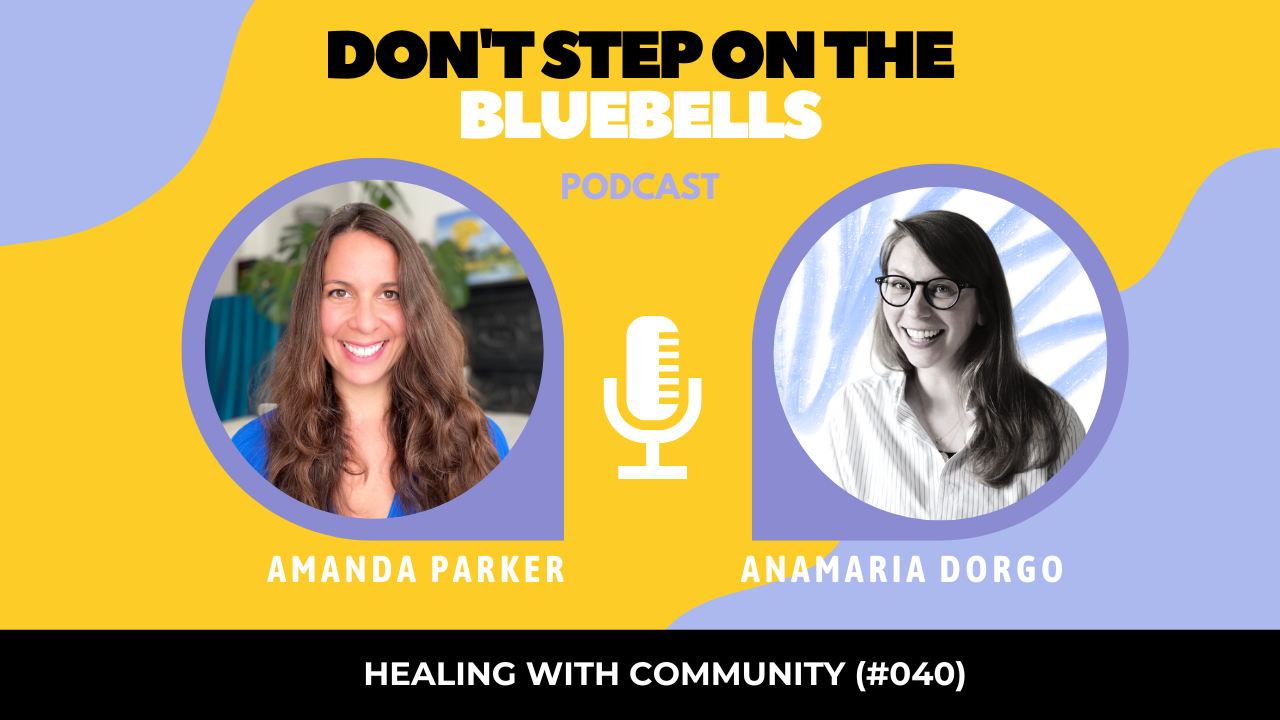
Listen to full episode
In this episode, community building expert Anamaria Dorgo reveals how authentic community becomes a powerful healing space, sharing her journey from isolation to building a global community and exploring how we discover missing pieces of ourselves through collective transformation.
Read the full Show Notes below!
Subscribe Now
“Communities are spaces where people that have common challenges, questions, goals... come together to collectively enable some form of transformation or change that would take more time, more struggle, more energy to go on that transformation path alone.”
Today's Guest
anamaria dorgo
Anamaria is a Learning and Community Consultant, community builder, and Learning Experience Designer. She started L&D Shakers 5 years ago, and still has the time of her life learning with and from peers!
With Handle with Brain, she supports organisations in building internal communities and designing impactful learning experiences. She co-hosts the Mapping Ties Podcast and writes the IRrEGULAR LEtTER.
How to get in touch:
Linkedin: Anamaria Dorgo
Website: L&D Shakers Community

Listen to the episode on
Show Notes
What if the path to healing isn't a solitary journey, but one best traveled in community? In this transformative conversation, Amanda sits down with community building expert Anamaria Dorgo to explore how authentic community becomes a powerful vessel for personal transformation and healing. Anamaria, founder of the renowned L&D Shakers community, shares her revolutionary approach to creating spaces where people don't just connect—they discover missing pieces of themselves they didn't even know were lost.
Through her journey from feeling isolated as the only learning professional in her company to building a global community of thousands, Anamaria reveals the secrets of what makes community truly healing: distributed leadership, intentional experimentation, and the courage to let go of control. She introduces a beautiful definition of healing as "finding and incorporating missing pieces in yourself"—some you know are missing, others you discover along the way.
The most revolutionary insight? Community becomes your confidence laboratory—a safe sandbox where you can test out who you're becoming before stepping into that identity in the "real world." As Anamaria reveals, "I use community a lot to build confidence and power by doing things here in the safe space and sandbox so that I can see myself doing it, so that I can believe that I can do it."
Whether you're a healer looking to understand the power of collective transformation, an entrepreneur wanting to build meaningful community, or someone seeking deeper belonging, this episode offers profound insights into how we heal—and help others heal—together.
This isn't just about building online groups; it's about creating spaces where people can experiment with who they're becoming, find their tribe, and step into their power with confidence that ripples into every area of their lives. What missing pieces of yourself are you unknowingly searching for, and what would change if you stopped trying to find them alone?
Key Takeaways
Healing means remembering who we truly are and bringing fragmented parts back together
Nature acts as a mirror that reflects our internal state and challenges
Slowing down and engaging our senses in nature reveals information we typically miss
Even brief encounters with urban nature can provide powerful insights
Nature creates an ideal environment for developing leadership skills
Group experiences in nature build unique bonds through shared challenges
The goal is to equip people with tools they can use independently
What We Talked About
How Anamaria's journey from isolation in corporate L&D led to creating a global community
The difference between authentic community and marketing-labeled "communities"
Why distributed leadership and member ownership creates sustainable, thriving spaces
The role of experimentation and "going with the flow" in community evolution
How COVID transformed L&D Shakers from local meetup to global phenomenon
The healing power of finding your identity reflected in others who share your challenges and dreams
Using community as a testing ground for building confidence and finding your voice
The importance of clear commitments, boundaries, and graceful exits in volunteer-driven spaces
How community members heal by contributing and finding missing pieces of themselves
Practical advice for aspiring community builders on starting small and building authentically
Guest Quotes
"Communities are spaces where people that have common challenges, questions, goals... come together to collectively enable some form of transformation or change that would take more time, more struggle, more energy to go on that transformation path alone."
"Healing is this process of finding and incorporating a missing piece in yourself. Sometimes you know what that missing piece is, and you go to search for it... And in many cases, you heal and you find missing pieces that you didn't even knew were missing."
"I use community a lot to build confidence and power by doing things here in the safe space and sandbox so that I can see myself doing it, so that I can believe that I can do it."
"Once you commit to an action and you put a deadline... your brain will figure out ways to do it, to make it happen."
"Build something that you would really, really like to see having or happening in the world. You have to need this in your bones."
"If you're not there for a week... are the other people able to talk to one another and continue to create value and connect and exchange? That's the test of genuine community."
Resources to Learn More
L&D Shakers Community - https://soft-talos-bf8.notion.site/Welcome-to-L-D-Shakers-23972fa0a18f419a9abe1bd59cb174c0
Anamaria Dorgo on LinkedIn - https://www.linkedin.com/in/anamariadorgo/
Mapping Ties Podcast - https://mapping-ties.com/
Irregular Letter (Newsletter) - https://irregularletter.com/
“Communities of Practice” by Etienne Wenger - https://www.amazon.com/Communities-Practice-Cognitive-Computational-Perspectives/dp/0521663636
Terms & Tools to Dig Deeper
Communities of Practice: Academic framework describing groups of people who share a concern or passion for something they do and learn how to do it better through regular interaction. This concept inspired Anamaria's master's dissertation and foundational understanding of community dynamics.
Confidence Laboratory: Anamaria's term for how community serves as a testing ground where members can build confidence and power in a supportive environment before applying new skills or identities in higher-stakes situations like work or personal relationships.
Core Team: The volunteer leadership structure within L&D Shakers consisting of 65+ members who take ownership of various community initiatives, programs, and events on a member-led basis.
Distributed Leadership: Community management approach where ownership and decision-making is shared among members rather than centralized around the founder. Essential for community sustainability and preventing founder burnout.
Exit Routes: Intentional pathways and conversations built into community structures that allow members to leave gracefully without shame or awkwardness, including regular recommitment check-ins.
L&D (Learning & Development): Professional field focused on improving individual and organizational performance through training, education, and skill development.
L&D Shakers: Global community founded by Anamaria for learning and development professionals to connect, share resources, and grow together. Started as a small Amsterdam meetup and evolved into a worldwide network with thousands of members.
Member-Led Community: Community structure where members take active roles in creating content, leading initiatives, and driving the community's direction rather than being passive consumers. Distinguished from expert-centered communities.
Missing Puzzle Pieces: Anamaria's metaphor for healing as discovering and integrating aspects of ourselves that are incomplete—some we know we're seeking, others we discover unexpectedly when we find them.
Recommitment Conversations: Regular check-ins (typically annual) where community volunteers can reassess their involvement and either renew their commitment or step back gracefully without judgment.
Safe Sandbox: Metaphor for community as a low-risk environment where members can experiment with new ideas, roles, and aspects of their identity before applying them in higher-stakes situations.
Social Learning: Educational approach emphasizing learning through observation, interaction, and collaboration with peers rather than traditional instructor-led methods. Fundamental to how transformative communities operate.
Volunteer Mandate: Clear time boundaries and expectations set for community volunteers, including realistic time commitments and defined end dates to prevent burnout and enable sustainable participation.
Thanks for listening!
What was your biggest insight from this episode? Let me know @amandaparker.co
Don't forget to support the podcast by subscribing and leaving a five-star rating.
Episode Transcript
Amanda Parker (00:01)
Welcome to today's episode of Don't Step on the Bluebells. I am here with the incredible Anamaria Dorgo, a woman who I greatly admire and who has had a big impact on my journey over these last years. She is a learning and community consultant. She's also the founder of the L &D Shakers community. She's got a podcast, a newsletter, so anything that you could possibly want to know about the learning space or about what it's like to either build or be within community. Anamaria is the go-to resource. I'm so happy that you're here today. Thank you for joining me.
Anamaria Dorgo (00:44)
Thanks for having me. I'm getting very emotional hearing you talk about me. So thank you. It's really special to be here today.
Amanda Parker (00:54)
Yeah, for me too, our friendship began a couple of years ago. I think we were just saying it's about three years since we first met. We met through your community. So I found my way into the L&D Shakers community and somehow I don't even remember how we started talking. And it's just been like magic ever since.
Anamaria Dorgo (01:20)
Yes, yeah, I don't remember how we first talked, but I remember the first kind of experience that I had with you as a coach when you so generously gifted me this Be With You session, which I still remember, I recall… what it was like, I recall what we talked about, I remember what I was feeling, I remember a lot of these things from that moment onwards. And I think after that moment we kind of kept in touch in very different shapes and forms now through the years. So yeah, it's Alanis Sheikos that has brought us together.
Amanda Parker (02:04)
Yes, and so many others. One of the reasons I was so keen to have you on Anamaria is when I think of community, you are the only person who comes to mind. I've been a part of a lot of different communities over the years, but there's something really special about how intentional and thoughtful you are with what you create. So it goes beyond just, okay, I've got, you know, this whatever webpage or channel that people can log into and talk to each other. No, you've really either uncovered the secrets or shown us the secrets or are discovering all along the way how to help people belong and create meaning and do something magical together. So today I'm really excited just to dive into the topic of community and like what that means to you, but also how that can be a vessel for healing.
Anamaria Dorgo (03:08)
Let's do it. I'm excited. Yeah, I'm talking about communities all the time from all the different angles, but never from this angle. It's the first time. So I am I am excited. Let's get to it.
Amanda Parker (03:09)
Yeah.
Yeah. So I think the first thing that I'd be curious to know, like if you were thinking of the community work that you do and you wanted to explain that to your five-year-old self, how would you describe it?
Anamaria Dorgo (03:38)
Maybe we'd say that it's like you bring together… the people you really like spending time with and hanging with. And in that space, it can be a garden, whatever your favorite spot is to hang out with this crowd, with these people. You get to do the most fun and exciting games and activities and plays with one another that really gives you energy. So by the end of the day, you feel just a lot of energy and happiness after spending time with these people that you really like. So, and I think that would make my five year old self very happy to hear. I think she's gonna be like, yes, sign me up.
Amanda Parker (04:37)
So you find a secret garden and people you like and you hang out there.
Anamaria Dorgo (04:41)
Hey, that's it! Play games!
Amanda Parker (04:45)
So like listening to you talk about that, what do you think makes the way that you view community different from maybe how some others are looking at community?
Anamaria Dorgo (04:59)
Yes, ⁓ I think that over the past few years, maybe even before that, but over the past few years that I've been aware of it happening, there's a lot of talk about community that makes me incredibly happy. ⁓ There are organizations that want to start communities, are individuals that want to bring together peers and like-minded people in form of communities.
That is fantastic. There's also very often the word is attached to to other things like my LinkedIn followers. I label them as my community. I have a newsletter and that is my community. And so it's been used, used maybe at times we use abuse. And I feel that if we're using it and attaching it to different things that are not true communities, we might be doing the concept of the word a bit of a disservice to me per and they come in so many different shapes and forms and definitely a newsletter list can evolve in a community for sure if you put in the thought and the intention behind that. To me personally, communities or spaces where people that have common challenges, questions, goals, there has to be some very strong red thread. amongst them, they come together to collectively enable some form of a transformation or a change that it is otherwise ⁓ maybe not impossible to achieve alone but definitely would take more time, more struggle, more energy to go on that transformation path alone that it is to go together. ⁓
The way I look at communities and the type of communities that I will always strive to create and advise others to create are communities where members are enabled to make that space their own. Communities that are much more distributed at the center, so beyond just the initiator or the person that started. the idea or the community, there is always a person or two, like or a small group that starts that for sure. You will always have it be steered by someone first. But I think as the community progresses, it's, I would always recommend people to just build it with the rest of the members. It's not yours, it's ours. And if you do that, you will find yourself motivated years after you've launched it.
You will find yourself supported by others, you will find that you have still the energy to keep going, creative ideas to keep going, because you're not alone. Otherwise I think it's very hard to sustain it over time and sadly I think that's one of the main reasons why a lot of communities ⁓ fold or die out is because it's hard to sustain them and so if you don't distribute that if you always keep that burden on your shoulders. ⁓ That's hard over time, like it's hard for anyone. So I always say just create a space where people can raise their hands and come up with ideas and do things, which also means you sometimes have to fight this need of control that we all have when we put something into the world and I've been there and I'm still there and it's a constant journey.
Amanda Parker (08:25)
Hmm.
Anamaria Dorgo (08:47)
But yeah, I think in a nutshell, that's how I would describe and we can go into any of this little buckets if you want to. yeah.
Amanda Parker (08:52)
You
Well, think it's really fascinating that you, well, first of all, that you share different ways that people are thinking about community. So the way that some people might be defining it, because I completely agree with you that it's a word that's like pretty overused at the moment. And if everything is a community, then like, what does that actually mean? You know, and it's not that some people aren't building community, you know, maybe the mailing list is the community, right?
But unless you're intentionally trying to, I don't know, like bring people together or cultivate a conversation, we start to lose meaning in the word. Like it no longer holds, you know, am I just really a part of a thousand different communities? In which case, like, please stop because I'm overwhelmed and like, I don't need that many spaces. But I think it's also really interesting to think about
I think in the online business world, a lot of people are building communities as a business model. I know it's something that I'm also entering myself, but if you're doing it centered around the person who launches it, how interesting is that for people long-term or for you to keep leading that space?
Anamaria Dorgo (10:13)
Yes, so I have a few thoughts here. I always tell people, well, if you're struggling to define what a community is or is not, like compared to everything else that is out there, that we name community, I always tell if you're not there, if for a week you're on mute, you're not there, you don't talk, you don't share, you don't post, you don't send anything out.
Or is the community, are the other people able to talk to one another and share and continue to create value and connect and exchange? So that is where a newsletter list, that's very hard to, because if I'm not sending my newsletter this week, there's no conversation. there's, those people are facing my direction and I'm facing their direction and it's very often very uni-directional. It's the same with social media. Yes, you have the opportunity to comment, but if I'm not posting anything, no one talks to me. So I have to have this first, I have to put something out there and receive like reciprocity from the rest. And yes, you can create a conversation, but I always tell people, well, if you want to turn your newsletter audience in a community, you need to find a space where these people can talk to one another without you being there. And your email, your email list is not enabling that. ⁓ Then, then yes, community as a business, it's out there. ⁓ It's hard, it's a hard thing to do. ⁓
I have, I don't have that experience. have not built a community as a business so far. I know very few people that have done that successfully. And there's always this, ⁓ either you're trying to build it, like distributed and invite everyone in in order to make it sustainable for you because otherwise if it's centered around you as an expert and there's plenty of examples in that realm that are working really well but I think as the expert or the initiator if you're building it around you you're locking yourself up in in that role and so once you've locked yourself up in that role
It's very hard to for other people to step up because that's not how you've that's not the norm, that's not the example, the behavioral examples, that's not how you've built it. So it is a bit harder to turn around after a while and be like, I know that this has been centered around me and my expertise for years, but now can you talk to one another? Can you start to share magically and just be active and engage and contribute? ⁓ that's hard. And also if you lock yourself in that, you gotta keep on going. You have to keep on going. And I think you mentioned that, like how interesting or fun is that for me? So can you entertain yourself alone in front of these people for a year or two or three or four, right? And maybe you can, but I would always say it's so much easier to just have a bunch of other people that are entertaining, right? And have
Amanda Parker (13:32)
You
Anamaria Dorgo (13:45)
that group of people that are constantly changing and you have people that coming with fresh ideas that you probably have never thought about. So that's the community. It's a bit, I like to build it where over time it's a bit detached from me. So it's suddenly not Anamaria's thing. It becomes our thing. And then everyone feels a bit responsible and proud of the space we're collectively creating.
That gives me a break at times, to be honest. Like I can, I can not be in the community for a month because life happens, you know, life, life happens and you have to take breaks. And so I think I would be very saddened to see a project that you pour your heart into fade away or disappear just because life happened and you need to take a step back.
Amanda Parker (14:34)
Well, that I think was role modeled so beautifully last year with when people within the L &D Shakers community got so excited about creating an in-person experience and created a whole team around what that looks like and bringing people together. I flew out to Amsterdam for that event last October along with you can tell me how many other people, but it was a huge group of us that had flown in from everywhere, which is such a testament to like the excitement and joy and like fun that they have in that space that people were actually like self organizing. I know that you were also a part of the organizing team, but you hadn't been the initiator of the idea. And still it created this whole in person momentum of like everyone going, yes, I'm going to the L&D Shakers event. Yay.
Anamaria Dorgo (15:25)
Yes, and even on that, indeed there were 10 people in the team that organized it and the idea wasn't mine. But I remember the people that were coming in the emails that we had like send with them back and forth before it's like, is there anything I can do? Do you still need facilitators? Can I take over something? Can I help with something? And so that was really fun to see where people were coming in as participants and they paid obviously a ticket and a hotel and everything to be there. And they still felt like
I'm not going there to be served something on a platter. Like we probably, I am like that when I'm going to conferences or I'm going to events. I'm paying a ticket. I am here to observe. I'm here to take in. There's someone else that organizes. But in the shakers case, people were all like reaching out to you. Hey, can I help? Do you need something? What can I do to create the thing? Which I think speaks to the culture. Maybe if you want to call that the culture that we've built inside them.
Amanda Parker (16:03)
entertain me please.
Anamaria Dorgo (16:22)
…inside the community. yeah, that was, it was a fun one. It was a hard one, but it was a really fun one.
Amanda Parker (16:28)
Yeah, I mean, organizing an event of that size doesn't sound easy, no matter what.
Anamaria Dorgo (16:30)
Was good memories, good memories that we've created for ourselves.
Amanda Parker (16:40)
So tell me, how did you get here? How did you even come to a place that you wanted to intentionally create community?
Anamaria Dorgo (16:51)
So I'm coming from, I'm Romanian, I grew up in Romania, I went to study there, so I studied there in the Romanian educational system, which is not very Montessori-like flavored, so it was very traditional and typical. But I think some, the core, core of it all, it started sometime in high school when I started being part of national programs for young people for students and then later on in university and during my master's I was always very pulled and drawn to student organizations and student organizations are our communities they are self-managed by the students they have committees you apply to be part of the team that steers everything and that that type I didn't knew that back then but what I knew was that as a
I was drawn to spaces where I was invited to contribute and share and I was gifted the trust that I can do that. And sometimes I felt that in school very, very seldomly, like very rarely. I felt that I'm trusted with something and that I have something in me. I mainly, I felt as a student, I felt like you don't have it in you. And then so you have to listen and sit in your bench and sponge it in and learn.
That's the whole purpose of it. You don't know, we know. And then you sponge it in, you take it in, and then you become wiser and you become smarter. ⁓ And I found that these other spaces were like, this social learning peer, again, those were concepts that I didn't have back then. But I know now that that is what it was. It was peers, same level, eye level, coming together, trusting each other, being a bit bold, a bit curious, not.
caring too much about the results, everything was very experimental. So it was just a massive playground or sandbox if you want. And so what that did to my knowledge on one side, but the biggest, the most important part was my self-confidence, my confidence in who I am and what I can do and my voice matters and I have something to share. And when I opened my mouth, there people that look at me and nod and thank me for an insight. And not only that, I can then...
I can then contribute to something. So I'm taking away, but I also feel useful in that space. ⁓ And then in my master's, I discovered this concept of communities of practice during my studies. And the moment that God explained to me in a course, I knew that that's the topic of my master's dissertation. So I reach out to the professor and
Amanda Parker (19:37)
Mm.
Anamaria Dorgo (19:40)
I contributed to the study of communities of practice within academia. And then I started working in HR and in L &D and somehow I parked that idea and it surfaced for me in a moment in which I felt the need for community. That was six years ago, I was working as the only learning and development person in the company. ⁓ It was really fun because my manager trusted me to do a lot of things and that was beautiful. But after a while, I felt the need to come together with other people that were doing the same thing for two main reasons. One, I didn't want to reinvent the wheel all the time. I'm pretty sure that there are other people that work on an onboarding program, that work on a leadership development program, that are working on projects that are sitting now on my to-do list.
It's like, who are these people and how can I learn from them? Because I don't want to spend too much. I just want to go for the best practices and the ideas that I know that work. And the second piece was this, I want someone to look at my work and give me feedback that comes from I've been there and done that. Like watch out for this, maybe tweak that. So that was my very personal need. And that's when L &D Shakers started.
It was never meant to be what it is today. So I think it's good to mention that it didn't start with this big vision to be a global community of online and offline and so many events and so many programs and projects for thousands of people. That was not the idea. My idea at the beginning was I living in Amsterdam by that time in the Netherlands where I'm still based. My idea was I just want to find five or seven people that work in other startups in learning and development to get together once a month, around the table with our laptops, with our work, and actually look at each other's work and learn from one another. So that's how it all started. And yeah, that was six, well, five years ago, and now the rest is history and it's been a very, it's been a wild ride, very rewarding.
Amanda Parker (22:02)
Yeah, I mean, it's incredible. It's just a testament to like you were answering your own need by saying, okay, does anyone else want to get together? And if I remember correctly, from stories you've told me before, you were just trying to find a community to come together like in Amsterdam to start and then it I think COVID happened, it started going online, and then more people started hearing about it. And turns out you weren't alone in that desire of finding others you could come together with to, in a way, talk shop.
Anamaria Dorgo (22:36)
Yeah, that's it. Well, before I started anything, I was looking for it. was like, is there like, where are learning and development meeting in Amsterdam? Is there a club? And back then it was this, the Meetup app where you could create meetups. I went to meetup, was like, is there any type of, and I couldn't find anything. And so I started this. ⁓ I'm happy I didn't knew.
so much about community or I'm happy that I didn't knew where this is going to end because probably that would have been not probably most definitely that would have been too big of a of a project and too intimidating for me to feel back then that I could do that. And so it started very small and very shy. And I think the one thing that we did really well, me and the people that were there like at the beginning, we just went with the flow. Like we just capitalized on momentum and energy and COVID came and we moved online and we just we just went and did the next logical step. And then if you constantly do the next logical thing and the next small thing and the next small thing you you look back and suddenly it's two years to your two years in it and you look back it's like my god we've done so many things like look at this so many events and now we have a free coaching program and now we're working on running an online conference or whatever, because you constantly do this next logical thing that arises or idea that comes from the energy and from the people and what you're learning and what you're hearing and what you're seeing. So, and I remember back then many people said, what is the strategy? Like, where is Alan D. Sheikahs going? It's like.
I don't know, we'll have to wait and see. Right now we're doing what feels right and what's fun and what we believe is useful for us. What is useful? What do we need? We create it. That's it. That was the strategy. And it's still the strategy today. If someone has an idea of something and they believe that what might be useful for a big chunk of the members, they just go ahead and do it.
Amanda Parker (24:52)
I think that I know a lot of our listeners here are healers or on some kind of healing path, maybe some path of, you know, discovering spirituality. And I think you're speaking to a lot of the audience and sharing that because we often think, and I'll speak for myself, like I often think I need a plan, I need to control the outcome, I need to know where I'm headed, I need to like map out all the steps to get there.
Whenever I do that, I never end up where I think I will. All that time and energy spent in the planning and figuring out and the strategy of things is often a bit wasted. I'm not saying it's always a waste because I think it's good to dream big and have ideas and visions, but this way of just to put it into these terms, surrendering to what wants to evolve and then responding to it as it comes up is so much more in flow and more playful and gives so many more opportunities to create something bigger than you could have imagined had you tried to plan it.
Anamaria Dorgo (26:08)
Yeah, for me, think what worked really well, and this is how I see the community evolving with other people doing so many things. mean, Alan D. Shakers now has a core team of 65, maybe more members. And this is not counting the coaches and our mentors and the speakers that come to obviously contribute. Everything is member led. But if I...
I think as I heard you talk about that, this, ⁓ I'm stuck in planning. I see that a lot. And sometimes I'm tempted to do that as well. ⁓ I think I have the benefit of being this, I plan better once I commit to something. So once I know that, okay, there's something that has to come to life. It has to take shape. It's an event. It's a comfort, whatever it is. And so that strategy I noticed that works really well.
And I always tell people, well, let's fine tune a bit the idea, but you don't have to have all the answers. Fine tune it, commit to the idea and put a deadline. And the moment you do that, your brain will figure out ways to do it, to make it happen, you know? But commit to something, to a clear artifact outcome something. Because the moment it's a project, your brain will make it happen and you will make it happen.
So.
Amanda Parker (27:29)
I don't know why you're not the coach. I mean, that's brilliant. I'm going to take notes after this call. It really does remind me of something my coach has often taught me and that really was a lesson I needed to learn about. You need to commit, you have to decide and commit. Once you commit and you put your energy towards that, it's also like,
Anamaria Dorgo (27:32)
Hey! ⁓
Amanda Parker (27:59)
it's a sign to like the whole world around you to yourself to your own energy to like the people around you if you believe in the universe or whatever it is like everyone's listening like, okay, we're gonna make this thing happen now, you know, and that that's probably very true that a lot of the planning that happens like when you really go into that planning, planning, analysis paralysis kind of space, which is very easy when you love thinking. And it's a strong suit of yours. And you're no longer able to really like, just move freely and respond to what's coming up. And it's probably a pretty, like intelligent form of procrastination.
Anamaria Dorgo (28:45)
Yeah.
Because the truth is that there are infinite ways to create something. So you can be in that planning and dreaming and maybe this and maybe that and maybe perfect it forever because you actually can. Like that is a reality. If you would take forever to do that forever, you will have ideas. When you commit to an action and you put a deadline and you probably bring two other three people to do it and you're like, okay, now it's the three of us and we have to do this by whatever next month, you're forcing yourself to commit to decisions and actions. And even though you know, maybe if we think we're going to come up with something better. But at that point, the deadline is forcing you to just, it doesn't matter, commit to something now and bring it to life.
Amanda Parker (29:34)
Yeah, there's like ⁓ a huge creative force in the constraint. So by giving yourself the constraint, and I guess, like for a lot of us who are like running our own businesses, we don't have all those constraints. Maybe sure about like getting money in or a certain number of clients or who knows what, but you're often lacking external constraints, unless you have like the client work, you know? And so it can be really difficult to
Anamaria Dorgo (29:42)
Yes, correct.
Amanda Parker (30:07)
realize that actually that constraint gives you more freedom, more creativity and helps you either bring something to life and like, either way you're going to learn from it, it can succeed or fail doesn't matter you're going to learn something powerful from doing it.
Anamaria Dorgo (30:10)
Yeah.
Hmm.
This, this you're going to succeed, or you're going to learn that's important, because I think that some of the things that keep us in this over analyzing and planning is our desire to minimize the risk of failure as much as we can. So I know that sometimes we say, ⁓
I'm gonna try and then if not, but actually I don't want that. So that's why I feel that we sit too much in this planning mode at times because I'm what else am I missing? What else can fail? What else can go? And maybe we I like to ask people, are you taking this too seriously? Like, why are you making such a big deal out of the things? know, like, I think we take ourselves too seriously and we
Amanda Parker (31:04)
Yes, always.
Anamaria Dorgo (31:11)
we sometimes see ourselves in such a high regard and it's it's I have that in certain areas of my life too. I somehow allowed this community to be the space where where where it's not about that. I will always do my best but I I know that that's the space where I show up as the mad scientist, the experimenter.
It doesn't have to make sense. It has to be fun. I'm going to do something. I want to put something out there. It's not going to be perfect. And that's OK, because that's the whole point of being in a lab with your lab coat and experimenting. So I think that's also a matter of a bit of a mindset or reframing, probably, of what this project is to you. And maybe if you attach your livelihood, your business, et cetera, to it, I can see how that can be a weight that will stop.
stop you from moving forward with little experiments and just see what happens. Because when something very important like your money, your business, et cetera, depends on it, or you feel like it depends on it, that's hard because that rubs against ⁓ creativity at times or even this boldness of, ⁓ I don't know, this is just for fun. Let's see what happens. Let's just put it out there and figure out and see what comes back.
It's just an experiment. So I think there's something to explore there at that mindset overlap and what meaning or labels you attach to the community or, yeah.
Amanda Parker (32:35)
Yeah.
It's a very different energy if you're entering with a sense, first of all, of like, really need this space and how can I make it valuable for me and others? How can we all get what we're needing, what we're yearning for? It's a very different energy to enter that with play, experimentation, as opposed to, okay, I'm going to have this many members and earn this much money and da-da-da. At some point, because I'm not against
paid communities. I know you may have different views on some of it, right? Like I'm not against a paid community, but what's what is it serving? And at some point, does it just finish serving that purpose? And then it's done, you know? So in my own life, I would say I've had different kind of communities that I've like started and led some just in the form of like
masterminds, you five of us are coming together for like a year or two and talking about either business or running a coaching practice or, you know, practicing different forms of shamanic healing or things like that. And we come together and it's always very clear to me when our initial mandate has kind of run out, you know, and for me, that's usually been assigned to say like,
thank you, look at this amazing thing that we've done and built together and like, goodbye. And it's usually the point of ending. But from what I'm hearing with what you're describing, especially in like specifically in the L &D Shakers community, but also just your mindset about community, that would just be an invitation to say, okay, what do I need now? How can I grow? How can we grow? Do we need to invite new people in? So there's a different kind of playfulness, if you're willing to be more experimental and see beyond what is this one goal that you're really like angling towards when that goal is fulfilled, then what?
Anamaria Dorgo (34:48)
Yes. Yeah, totally. And also this the fact that certain particularly for smaller communities are like the mastermind, it has a very clear purpose. And that purpose will be achieved. And the community is closed. And that is so normal and absolutely fine. And I would even say, don't try to push to stretch it if it served its purpose. And even there.
Amanda Parker (35:15)
Now we're going to talk about baking. No thanks.
Anamaria Dorgo (35:17)
There we go. Yeah. that's, but that's the thing like, okay,
it evolves in something else. If those five people suddenly discovered a passion for baking, whatever, and it can evolve, that's not a problem. But then just know that this project, this community, this group has served its purpose because we all reached a finish line. And certain communities are built like that. have a clear, it's a very, it's a very straight step by step from A to
B or A to Z in this case, right? So, you know, you go to A, B, and then you reach Z and then it's like, okay, it's over. And L &D Shakers on the other hand, is this ongoing space. And I think it became that because it grew so big at the beginning, because there was a need that so many people had. And now there was that space that we were creating. And so people flocked naturally to that.
And COVID was about, we were five months in when COVID started and then we opened it up like we were meeting online. And so it was like, didn't matter if you live in UK, right? And we were in Amsterdam, anyone could join. And so that definitely was the right moment at the right time in the worst context ever, I think. But for a community, for our community and for many online communities, that was a strong push and energy boost.
because maybe you remember everyone, we were all online crazy about learning and I was attending so many freaking webinars every day and lunch and lunch and all I was doing was like logged into some zoom all the time. And so that was the time to do that, you know, it was the perfect moment. And I think because it grew so much, we now have this, it's an ongoing space. Like we don't know when R &D Shakers is gonna.
it's gonna die or it's gonna fade because we have constantly new members and fresh members. But if I look closely at the people inside or the dynamics inside, you do have that thing of people coming in, they have a purpose, they got to their personal Z and they're out. that but but but so there's constant people that get to Z all the time. But at the same time, there's constant people for whom Alan D. Sheikers represents the A today.
So it's like an ongoing journey of different people and some will be done and will leave and others will just start. So that's the only difference. But at the end of the day, it is the same dynamics as what you just said with your mastermind. I'm coming in, I have a need, I fulfill that need in three months, six months, a year, it doesn't matter, two years, and I'm going out. And some people come back. So it's just there's, it's because we don't have any rules for that matter and we're too… with thousands of people so you don't notice this. Obviously in a group of five you notice that much more.
Amanda Parker (38:18)
I also think it's interesting because as humans and maybe this is not in your circles, but in my circles and the people I know, people are afraid to end things. They're afraid to leave or to close things out or to hurt someone's feelings. I've had to be clear and I don't always get it right, but I've had to be clear when I feel that this space is no longer serving.
to be able to say, listen, let's celebrate what we've done so that it's not like dragging into some territory where you're dreading getting on a mastermind call, but that you can honestly say, hey, listen, we're all in such different places now. Look at what we did and find a way to close that space together. And I think, yeah, that's probably just as important, being really intentional with how you end something.
Anamaria Dorgo (38:51)
Yes.
Amanda Parker (39:11)
the same way that you're so intentional with how you begin it, that people really have that chance to step out gracefully. I remember there was, I was the chair of an alumni committee for, it was called the Coaching Fellowship, I think now it's the Women's Impact Alliance. And I remember, because we were an all volunteer team, I think there were 10 of us working together and we were working together for 18 months.
Anamaria Dorgo (39:15)
Mm-hmm.
Yeah.
Amanda Parker (39:41)
And I had no idea how do you lead a volunteer team for 18 months and actually get stuff done? And so I just made it a point to have regular recommitment conversations that everyone could bow out gracefully without judgment whenever they wanted. But if they were in, they were in. Because I think that can happen. And I'm sure that happens in your community. It's happened in communities that I've
been a part of also where people don't really know how to do that and they kind of like fade out into the background, you know? But there are some people who it's really like, okay, are you like all in on this? And then I do expect you to show up and I do expect you to follow through on your commitments. And that's what I think is really special also about what you've helped to create and foster that people
Anamaria Dorgo (40:24)
Yeah.
Amanda Parker (40:38)
want to give their time. I'm not saying they all are like perfect and you don't have to out anyone now, but that they want to that they actually want to show up because there's, you know, coming to the topic of this conversation. There's also like a healing in that for them. There's something that they're receiving by showing up.
Anamaria Dorgo (40:57)
Yeah, everyone has a different need that it's being met as a result. And also, and that need changes. So members move and they come in and go and we have people that were
in the community for two years and you never really saw them. And after two years, they raised a hand and said, now I'm in that moment in my life when I'm willing to take ownership of something and bring something and create something. And years have passed where you would say like, OK, and that's OK. ⁓ I just want to go back a bit to this example that you give with endings and working with volunteers and et cetera, because when you work with volunteers,
It happens. Life happens and we have so many other commitments and things in that life where we have to be there and volunteering by definition you don't have to be there. So I always tell people this doesn't have to feel like work, this doesn't, this has to bring you something. The moment you feel it's not sparking something it's time to leave that place for someone else that has the energy and the drive and the motivation to bring it forward. And your example, what you just gave this.
At the beginning, at the start of something, there's always motivation and energy. I think that's the moment where these exit routes should be brought into conversation. So the way you've done it and had that recommitment, think that's the number one thing that I recommend community builders to do whenever they have volunteers stepping into roles or have a deadline, have a mandate.
a moment that gives you and the other person the opportunity without shame or dread or any other type of emotion to go into a conversation and talk about the commitment and whether we continue or we drop it. And so that was that's a spot on example. And in Alan D. Sheikha's that happens as well. We have that.
We have put in that thing. So there's a commitment of at least six months, ⁓ ideally a year and after a year. So in December of every year, I go back to the core team and tell them friends, how does the next year look like? Is this still it for you? Do you want to keep on going or do we drop it to someone else? But also I have this one thing in the onboarding for every new role, every new person in the core team, always tell them, no one is going to look over your shoulder and no one is here to manage you. This is yours. You're going to hit the ground running. You're going to take this like
Amanda Parker (43:06)
Mm.
Anamaria Dorgo (43:35)
you're gonna make this happen. At the same time, the moment you need to drop the ball, please reach out and let me know. Anamaria, I need to drop the ball. Because the one thing that we wanna avoid is you dropping the ball, no one knowing that you dropped the ball and having someone at, you know, after a while be like, oh, wait a minute, Amanda's like, she was supposed to be doing this thing. I haven't heard anything. I don't know what's happening. I haven't seen her, you know, her project, her contribution.
Amanda Parker (43:59)
Mm.
Anamaria Dorgo (44:03)
And so then that puts me in the, in the position of going to knock on someone's door and, and I'm happy, I'm happy to do that. But I think it's so much clean. if I, if I tell the beginning, Amanda, have the permission, not that anyone has to give it to you, but to drop that ball at any given time. I will take the ball. I would pass it to the community. If someone catches it, the project keeps on going. You know, if no one wants to commit, the project is folded because if we don't do the things, we don't have the things. So in a members led community where no one is paid to do anything, if we don't do things, we don't have things. So it's as simple as that in the community. And then to come back to your healing point, one question I always...
Amanda Parker (44:33)
Yeah.
Mm.
Yeah.
Anamaria Dorgo (45:00)
There's two questions I ask people when they reach out and Anamaria, I want to something with the shakers. I know some, I know what, or maybe I don't know what. Different people coming in different angles. But there's always two questions. One is, why are you doing this? Like, this is going to take time. It's going to take energy. You're probably going to have to sit three months from now on a Sunday evening working on this project. If someone asks you, why are you doing this on a Sunday at five? And you could be chilling on your balcony. What are you going to tell them?
So what's that why for you? And that can be anything, be as transparent and as open. For some people is, I want eyeballs on me, my profile, my business. That's perfect. For other people is, I have now 10 years in the industry. I learned so much from so many mentors and people. It's my time to give back generously without waiting anything in return. I just want to contribute. That's my why. So everyone will have a different why. And I think that's their healing.
That's the missing piece that they're looking to get, right? So that's their healing journey or that's their healing expectation. ⁓ And that's okay. So I asked them, let's narrow down on the why and then realistically, realistically on your busiest week, how much time do you have to set aside for something that you don't get paid to do? That's it. Those are the only two questions that I ask people from the get-go.
Amanda Parker (45:59)
Hmm.
Thank
Yeah.
Well, think,
yeah, it sounds like you also help people avoid having to go into shame because I think that also like can create that awkwardness like what you were describing if someone falls off a project or they're not really able to keep up. Like if I'm speaking to someone and I'm like they're supposed to send me something and don't and then I don't hear from them like ever again. I'm like, shit, they entered the shame spiral. Like, no, no, no, don't worry. You can still talk to me. So
Anamaria Dorgo (46:31)
Yes. ⁓
Amanda Parker (46:54)
I think like as humans, that can be quite natural when we're like, no, I didn't do the thing. And you're helping in advance to avoid that someone feels that. To ask you another question, because I love to ask, well, everyone who comes on the podcast, what is your definition of healing?
Anamaria Dorgo (47:16)
Yeah, I think I hinted a bit. So, you know me, you know that I'm always like, no, healing. I don't know if that's my thing. don't know if that's my cup of tea. That feels like I have so much respect for that word in general. It carries so much weight for me. ⁓ I knew you were gonna ask this. And so I was like, okay, how do I, what is healing for me? How do I explain it to Amanda? Because I'm sure she's gonna ask me that.
⁓ And so, there's the definition or the way I look at it is there's, healing is this process of finding and incorporating a missing piece in yourself. And sometimes you know what that missing piece is, and you go to search for it. And it's like, okay, that's the piece that is missing. How do I find it?
And how do I place it? put it back. And also in many cases, me included, I know with other people, sometimes you heal and you find missing pieces that you didn't even knew were missing. Like you had no idea and then you find the piece and it's like, oh my God, I need this. And it fits here, but I didn't knew that I had that little hole there. So both parts matter.
Amanda Parker (48:39)
Mm.
Anamaria Dorgo (48:41)
How do we move through the world with our relationships, our families, the job with you, the purpose, the side projects, our passions, whatever it is. The way we live our life every day, all we do is finding, is try to find missing pieces that we know about or missing pieces that we don't even know that they're missing. And we only know when we find them. So that's...
that I can see in myself. So that feels like a definition of healing that I'm like, okay, that's what it feels like for me.
Amanda Parker (49:21)
I mean, that's such a beautiful way of expressing it that you're continuously integrating these little pieces and elements of yourself that maybe you didn't even know were missing to help you just feel, I'm putting my own spin on what you've said, but to help you feel a bit more whole, a bit more integrated and complete.
Anamaria Dorgo (49:42)
Yes, yes, that's it.
And sometimes you try to fit in a piece and it feels like, okay, it's matching. You know, when you put you make puzzles and you're like, a piece matches somewhere, like the shape, but it's actually it's not where it goes. And so sometimes I think in the healing process, you also have to take pieces out and it's like, no, I know that I filled that hole with something back then. A while back.
Amanda Parker (49:58)
You
Anamaria Dorgo (50:10)
But actually today I found a piece that it matches that whole better than the old piece. So we also take pieces out. We also exchange pieces, I think, in that healing journey. So also for communities and how our community is healing, or where we're going, going back to that motivation, think that's different people coming to this.
Amanda Parker (50:14)
you
Mm.
Anamaria Dorgo (50:34)
into this I'm contributing mindset and I'm gifting now my time and energy to this collective space for to fill out different, different holes and puzzles. And for some it might be, I just want, I just want to contribute for others at the very core. might be, I want to be seen. I want to feel useful for others. I want a space where I can find in Alanishe because there was no manager, there's no salary, there's no, no one is assessing you. You don't have deliver. So for some people it can be this freeing space where they can find and play on the edges of their creativity, which is a piece that probably they don't find at work where everything has to come in a certain shape and form and it had to be professional and whatever. it loosens up or joy or so there's so many different pieces that contributing members might try to find in community work and also if they do decide to be those pieces have changed for me. I was looking for one piece and for something for something very specific in the when I started this and in the first year and as the community grew and evolved and my role evolved I started to be like okay I got that but now there's something else that I can take from here and there's so it also evolves the strive and motivation and what keeps bringing you back to the community as contributor, active contributor, that changes over time. As long as you recognize and you're very honest with you and with the rest of the people, what's in it for you, what's in it for me, why am I doing this? ⁓ And I ask myself that question very often, almost every year I ask myself, why am I doing this? It's five years and it's hard work. I'm not gonna...
Amanda Parker (52:16)
Mm. Why am I doing this?
Anamaria Dorgo (52:28)
It's the most rewarding work and it's paid off and it pays off like in unimaginable ways, but it's hard. It's not a walk in the park. I have to, every year I have to go back into myself and be like, what is my why? What is my why this year and how do I create that and how do I make that happen for me in that space?
Amanda Parker (52:39)
It's really beautiful because of course I want to know what kind of healing or transformation is actually possible in community. And it sounds like you're able, like so much of the healing comes from maybe being able to identify things that you're missing or ways that you want to grow and being able to find ways to test that out or act that out within that community space that you can also grow and evolve. If I think about like within the healer community that I'm leading, you know, that might be that people are really looking for support as they're, I don't know, like trying out a new healing modality and is this working? And has anyone ever had this happen? or it might be that you're trying to grow your business in a slightly different way and have no idea how to charge for that work. And you're the things that you're actually working through and what's important to you will change over time.
Anamaria Dorgo (53:34)
Hmm.
Amanda Parker (53:53)
And the community itself is like a healing space. As long as you design it that way, of course, that it's like open and welcoming, that it will catch you no matter where you are, support you, lift you up, help you grow into that next version. And that's also incredibly healing just to feel like you belong, like you can show up as yourself, like you can grow and evolve and you'll still be welcomed into that space.
Anamaria Dorgo (53:59)
Hmm.
Yeah, yeah, it's at the start, very often people when they find the community, say, it's usually two main buckets, I am alone. And I'm fine. I'm trying to find peers. I'm trying to find other people that do the type of work that I'm doing because I don't want to feel alone in this. In my case, he was like very selfish. I just want playbooks. I want resources. I want to be in the room with the smartest people that do what I do to learn from them. Like that was my thing. And for sure, there's other people that are finding L&D shakers and they're joining for that reason. ⁓ And then the, there's this, I want to belong or there's something of value here that
Amanda Parker (54:58)
Hmm.
Anamaria Dorgo (55:05)
can bring me forward at the very start. And then as you go and you, especially when they move through the layers of the community and they move towards the core and towards I'm contributing once and then I'm ready to commit and I'm launching something and I'm starting something, I'm putting something in the community. There's so many people have said, I'm becoming so much more confident as a result. I tried something in L &D Shakers and I went and I proposed it at work. And so now I'm suddenly,able to do that and my manager's praising me and I'm a year later I'm up for a promotion and I'm pretty sure it's because I get all of these cool ideas that I go and pitch with a lot of confidence because I know they work or so it's that confidence or that voice that sometimes people are finding their their voice is like now I know who I am I know what I stand for I can refine those things it's so there's there's so many things in which this shows this healing can
Amanda Parker (55:48)
you
Anamaria Dorgo (56:04)
show up. ⁓ I know I can do this. Like again confidence or resilience. Maybe this I'm I am going back I think it's confident but at times it could also be this sense of power. Like I've done and I for me and that started in the second third year in Alanis Shakers I use that a lot. How do I build confidence and power by doing things here in the safe space and sandbox so that I can see myself doing it, so that I can believe that I can do it, so that I can go out of the community when I'm looking for a job or with my manager or, I don't know, negotiating for a raise or pitching a project at work. I can do that from a position of power and confidence because I've been there, done that before, and no one can tell me that I can't do it, you know? So it can be that. There's so many things.
We talk about creativity or let loose or yeah, there's many healing puzzle pieces I think that people take.
Amanda Parker (57:08)
This is like the absolute golden nugget I've just written down, like the minutes that we're at and the notes to come back to. mean, like being able to feel confident to find your own voice, like, man, if that isn't 99 % of what I'm helping people discover through coaching, through healing, through whatever it is, like, we want to know ourselves, we want to feel good about ourselves, we want to trust ourselves to
Anamaria Dorgo (57:12)
Hah! Hah! Yes.
Amanda Parker (57:36)
Do things we never imagined possible. If that is not a reason to go join L &D Shakers, I don't know what is.
Anamaria Dorgo (57:47)
I'm thinking that in your case, because you work with healers and some are in the journey and saw others at the beginning of their journey. And I see that as well in Andy Sheikha's with folks that are transitioning into the industry, right? So there's a change there. going through a change. And maybe in your case, there people that probably are, they know they're healers. Maybe they don't know, maybe they're at the beginning of it, et cetera, or they're just starting that journey. A community can really, if you meet other people, other healers, it definitely can sharpen that identity of yours as a healer too. And Alan D. Sheik has this manifest with, my god, I'm so happy I found you. I was doing this work for so long. I didn't even know this had a name because, you know, my job title is project manager, but I'm delivering trainings and I'm working on facilitations. Like this has a name and it's called Alan D. I love it. That's what I want to be doing, right? So
it when you're immersing yourself in that collective identity of a healer, a learning professional, an innovator, whatever the community might be about, you look around and you're like, oh, they are these people look like me, right? They have this we have the same values, beliefs, the same type of work, the same questions, challenges, dreams, ideas. And so if they are all triangles, then I know that maybe my whole life people have told me that I'm a circle, but actually now that I look around, maybe I'm a triangle, you know? And that feels so, it can feel like such a relief at times. ⁓ Especially I imagine with healing, we are like probably like, I don't know, Emma, can I call myself that? And then you go into the community, yes, man, call yourself that. And the moment you start to do that, it can feel like a burden is left off your shoulder. And the community helps you fine tune that identity and own it and believe in it and wear it proudly in the world.
Amanda Parker (59:44)
So for people who are listening and they want more Anamaria and they want to learn more about community and everything that you're doing, where can they find you? How can they get in touch?
Anamaria Dorgo (59:57)
Yes, the best spot is LinkedIn. And if you my name, you're going to find me or maybe we'll put the link in the show notes. And so on LinkedIn, you'll find all of the projects that I'm working on, podcasts, newsletter, and everything that I kind of share a lot about communities there. And it's also where you could just reach out with a message if you want to grab a coffee and chat more about communities.
Amanda Parker (1:00:20)
She is such a fun place on LinkedIn. I have to say I love following you there. Definitely, I'll link to ⁓ your LinkedIn in the show notes so everyone can go ahead and get in touch. Just as we're coming to the end of the conversation, is there any advice that you would give to someone who is just starting out?
Anamaria Dorgo (1:00:25)
Yeah, I always tell people start small, don't... it's okay to dream big, but don't let that the pressure of the big dream prevent you from doing something that you can do today of a value. And I always tell them build something that you would really, really like to see having or happening bring in the world. That's probably the number one advice I give community builders.
You have to knead this in your bones. You have to think about it. You have to. It's like if it's something that kind of doesn't let you not do it. So if you have that, follow it and jump at it, it's going to be fabulous. ⁓ But just don't force something into being.
Amanda Parker (1:01:26)
Beautiful. Thank you so much for sharing your time and your wisdom so generously. You are one of my favorite people and I'm so happy that I got to have this conversation with you here on the podcast.
Anamaria Dorgo (1:01:49)
Thank you for having me. This was really, really cool. I loved it. Thanks.
Amanda Parker (1:01:55)
And to everyone who's listening, thanks for tuning in to this week's episode of Don't Step on the Bluebells and I'll see you next time.