#051 Somatic Healing in Nature: How Wilderness Reconnects You to Yourself — Amyee Oen
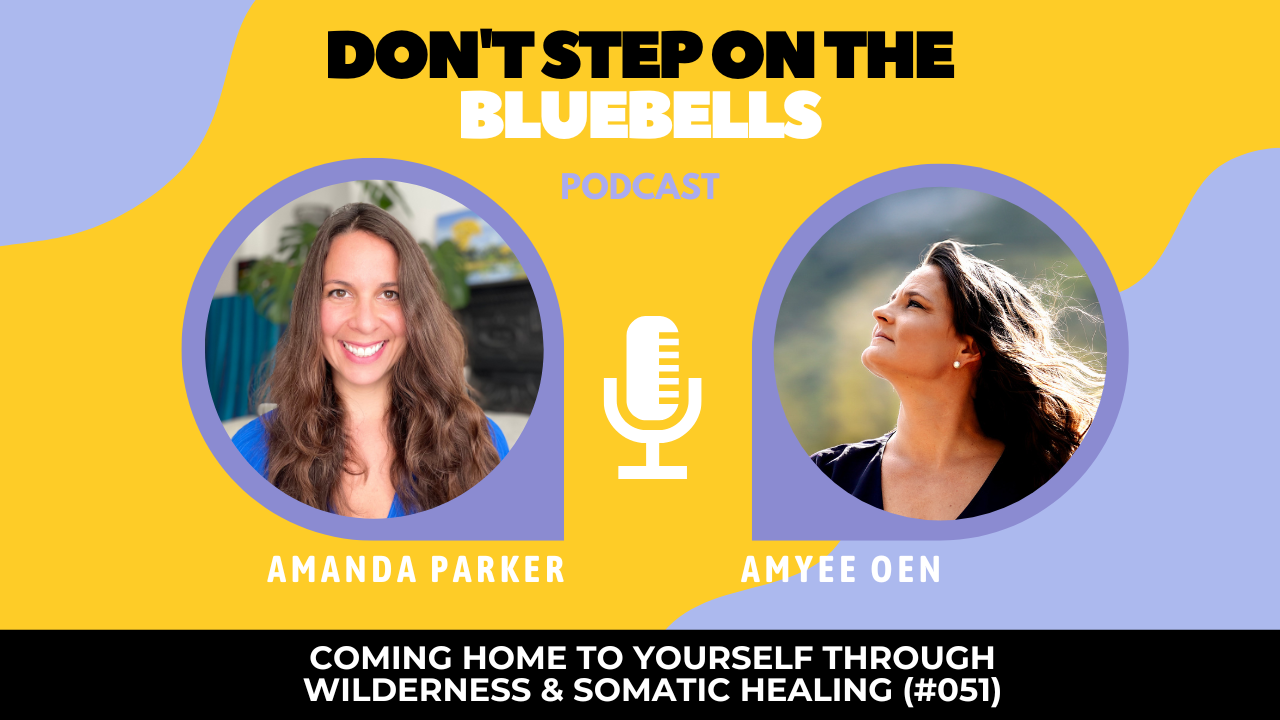
Listen to full episode
In this episode, former ER nurse Amyee Oen reveals why we're not meant to be regulated all the time, how to flow through nervous system states instead of getting stuck, and why the wilderness might be your most powerful teacher for coming home to yourself.
Read the full Show Notes below!
Subscribe Now
“We are animals, which people don’t like to really talk about or understand, that we’re meant to have all of those states and move through them, right? Go up and go down... We’re not supposed to be regulated all the time. We’re supposed to move through state. It is a wave.”
Today's Guest
Amyee Oen
Amyee Oen is a former ER nurse turned board-certified nurse coach, somatic breathwork facilitator, and transformational guide who supports nurses, coaches, and entrepreneurs in coming home to themselves—creating lives rooted in freedom, fulfillment, and deep healing.
After witnessing the limitations of conventional healthcare—and walking her own path of healing from trauma—Amyee became devoted to helping others reconnect to the innate wisdom of their bodies and the wild intelligence of the natural world. She believes that healing happens not by fixing or striving, but by remembering what's already within us.
Through a powerful blend of somatic breathwork, nervous system healing, and embodied coaching, Amyee guides clients to release stored tension, expand capacity, and cultivate self-trust, self-worth, and deep embodiment.
Her work often takes people into nature and through adverse wilderness experiences—where the mountains, rivers, and elements themselves become mirrors for resilience, surrender, and truth. In those raw and awe-filled moments, clients learn to listen to their inner voice, reclaim their autonomy, and remember their wildness—the part of them that knows how to meet life fully and trust their own knowing.
Amyee is known for creating life-changing retreats and nature-based healing immersions that weave together adventure, breathwork, and deep somatic work. She holds space for people to reconnect with their power, dream boldly, and express themselves authentically.
Beyond personal transformation, Amyee is passionate about helping nurse coaches and heart-centered entrepreneurs build aligned, thriving businesses that reflect their truth, medicine, and purpose. She believes that when healers are grounded, connected, and resourced—mentally, emotionally, and financially—they create a ripple of healing that impacts entire communities and the world.
Guided by a deep reverence for nature, the human spirit, and the intelligence of the body, Amyee's mission is to help people live more connected, joyful, and expansive lives—where healing is not just about surviving, but about reclaiming the wild, wise, and untamed parts of who we are.
How to get in touch:
Website: https://amyeeoen.com/
Instagram: https://www.instagram.com/amyeeoen/
Facebook: https://www.facebook.com/amyee.oen/
LinkedIn: https://www.linkedin.com/in/amyeeoen/

Listen to the episode on
Show Notes
Ever notice how your body tenses before opening an email from your boss, or how your heart races before sharing your work? That activation you've been trying to suppress might not be the problem. What if you're meant to move through those states, not eliminate them? In this episode, Amanda speaks with Amyee Oen, whose perspective on nervous system healing was forged in the wild waters of Alaska, where survival depends on trusting your body's wisdom completely.
Amyee's journey from ER trauma medicine to somatic healing reveals what conventional healthcare often misses: presence, attunement, and space to actually feel what's happening in your body. After recognizing she was living in chronic fight-or-flight, she discovered breathwork and somatic practices that changed how she inhabited her own skin. Now she guides others through similar transformations in the wilderness itself. As she shares, "We are animals. We're meant to have all of those states and move through them. We're not supposed to be regulated all the time—we're supposed to flow through states like a wave."
This conversation delivers immediately applicable wisdom: track what state your nervous system is in, understand why vigorous movement helps activation but worsens freeze, and learn how nature does the healing work when you know how to receive it. Whether you're successful on the outside but disconnected inside, struggling to use your voice, or exhausted from trying to stay calm all the time, this episode offers a different path.
What would change if you trusted yourself the way Amyee trusts herself in the wilderness—knowing that even if gale-force winds roll in, you've got you? Listen to discover how reclaiming your wildness might be the key to coming home to yourself.
Key Takeaways
Wilderness builds self-trust: True confidence comes from knowing you can handle adversity—whether navigating storms or building fires in emergencies. This principle applies to all of life's challenges.
You're not meant to be regulated all the time: Our bodies are designed to move through different states—activation, rest, and everything in between. The goal is flowing through states, not getting stuck in them.
Nature is a healing mirror: The wild shows us what needs to come through emotionally and spiritually, creating transformative experiences when we're held by the earth.
Track your state first: Before you can regulate, notice what's happening in your body in real time. Are you activated? Frozen? Different states need different resources.
Match movement to your state: Fight-or-flight needs vigorous movement like running or dancing. Freeze needs gentle practices like warm baths, yin yoga, or slow nature walks.
Healing is reclaiming wholeness: True healing isn't fixing what's broken—it's an ever-evolving journey of reclaiming all parts of yourself and discovering who you are beneath inherited programming.
Follow what calls you: The right teacher or resource appears exactly when needed. Trust your intuition and follow the threads that unfold on your healing journey.
What We Talked About
Amyee’s experience of growing up in the Alaskan wilderness
Commercial fishing as a way of life
The journey from ER nurse to somatic healer
What somatic work really means
Nervous system states and activation
Resourcing for different states
Guided wilderness experiences and breathwork on mountaintops
Reading energy in the wild
Who comes to work with Amyee and why
The relationship between fitness needs and life phases
Fear, self-trust, and asking for help
Following the threads on your healing journey
Upcoming retreats and land-based healing experiences in Alaska
Guest Quotes
"I've got me, I've got me because I know if the worst happens, I know how to take care of myself even if the gale force winds rolls in. I can build a fire and I can build a shelter."
"We are animals, which people don't like to really talk about or understand, that we're meant to have all of those states and move through them, right? Go up and go down... We're not supposed to be regulated all the time. We're supposed to move through states. It is a wave."
"I feel like nature does a lot of it for us... we unfold in that experience, our fears and our insecurities and our desires in that spaciousness."
"The ever evolving unending journey inward to reclaim and know and accept all parts of ourself, both the shadow and the light."
"Who are we without all of the programming, the layers, the societal containing that we, yeah, we inherit we get from living."
"When we are clear, connected, and regulated and not living in fear... It's not going to trigger the bear's fear response, right?... we're always communicating energetically."
"Follow where you're being led, because it's exactly perfect and exactly right... this modality, this book, this podcast episode, or this person came in... letting the heart and the soul and intuition lead."
Resources to Learn More
Amyee’s Coaching & Somatic Work - https://amyeeoen.com/
Terms & Tools to Dig Deeper
Activation: The body's mobilization energy when moving into fight, flight, freeze, or fawn responses. A state of heightened nervous system arousal that wants to move and be expressed.
Bikram Yoga: A style of hot yoga performed in a heated room with a specific sequence of 26 postures and two breathing exercises.
Board-Certified Nurse Coach: A specialized nursing credential that combines traditional medical knowledge with holistic coaching practices to support whole-person wellness.
Breathwork: A somatic practice using conscious breathing techniques to release stored emotions, access altered states of consciousness, and regulate the nervous system.
Commercial Fishing: The large-scale harvesting of wild fish for profit, often involving intense physical labor and navigation in challenging waters.
Emergency Medicine/ER Nursing: Acute care medical practice focused on immediate treatment of injuries and illnesses, often involving trauma and life-threatening situations.
Fight-Flight-Freeze-Fawn: The four primary nervous system survival responses to perceived threat or danger.
Nervous System Regulation: The process of helping the nervous system move fluidly between different states (activation and rest) rather than getting stuck in one state.
Perimenopause: The transitional phase before menopause when hormonal fluctuations begin, typically starting in the 40s and affecting physical and emotional well-being.
Somatic: Relating to the body; in healing contexts, refers to body-based approaches that access wisdom held in the physical form rather than relying solely on cognitive understanding.
Somatic Breathwork: A style of breathwork that combines conscious breathing with body awareness to release stored trauma and emotions held in the tissues.
Spinning: High-intensity indoor cycling classes typically performed in dark rooms with loud music and vigorous cardiovascular effort.
State Tracking: The practice of noticing in real time what's happening in your body and nervous system—where you are on the spectrum from activation to rest.
Type 1 Diabetes: An autoimmune condition where the pancreas produces little or no insulin, requiring lifelong management and monitoring of blood sugar levels.
Window of Tolerance: The optimal zone of nervous system arousal where a person can function effectively, think clearly, and respond (rather than react) to life's challenges.
Wild/Wilderness: Untamed natural landscapes; also refers metaphorically to the untamed, authentic essence within each person that hasn't been shaped by societal conditioning.
Yin Yoga: A slow-paced, meditative style of yoga with poses held for longer periods to target deep connective tissues and promote relaxation.
Thanks for listening!
What was your biggest insight from this episode? Let me know @amandaparker.co
Don't forget to support the podcast by subscribing and leaving a five-star rating.
Episode Transcript
[00:00:00] Amyee Oen: So it depends on what your state is. So if we're able to track where our body is when we are moving into maybe more activation, or maybe when we're moving into more feeling like freezy, which feels heavy and kind of stuck and lethargic and we feel confused. Learning how to resource our body with where our nervous system is, is really helpful in coming back into connection and presence.
[00:00:24] The thing where people get kind of stuck is when they're, they try to pick the same resource for every state that they're in because they don't know what state they're in.
[00:00:37] Amanda Parker: Welcome to, don't Step On the Bluebells, the podcast for personal healing and transformation. Take center stage. I'm your host. Amanda Parker, and I'm a fellow seeker on the journey of personal growth. Join me as I delve into the stories of gifted healers, guides, and everyday people who have experienced remarkable transformations.
[00:00:56] Listen in as they share their practical wisdom to enrich your everyday life. And don't forget to hit, subscribe, and never miss a new episode. Welcome to today's episode of Don't Step On the Bluebells. I have a very special guest today, someone who I am very excited and proud to call my friend. We are talking today with Amy Owen.
[00:01:19] She's a former ER nurse turned board certified nurse coach. She's a somatic breathwork facilitator and a transformational guide who supports nurses, coaches, and entrepreneurs in coming home to themselves. I know the power of her work 'cause I have had the pleasure of having many conversations with her, where she is definitely reminded me and guided me back home.
[00:01:45] So I'm so excited that you have said yes and agreed to be here with us today. Amy,
[00:01:50] Amyee Oen: I'm excited to be here and thank you for the ask.
[00:01:53] Amanda Parker: Well, this request of mine for you to come here today came from a conversation we had not that long ago where I was sharing with you some of my own experiences of being out in the wild and hiking and mountain climbing and.
[00:02:11] Things that I often associate for me as being out of my wheelhouse. Like I'm not that comfortable doing that. And I remember in that conversation one in particular where you were saying, you know, it's really funny to hear you say that 'cause this is absolutely where I'm really comfortable. Yes. Yeah. And it was so notable to me because.
[00:02:35] Not many people can actually say that and mean it, that they really feel at home in the wilderness, and I am just so excited to learn more about what that. Means for you and how that shows up in your life.
[00:02:53] Amyee Oen: Alaska is such a special place. Um, it's really, it truly is like one of those why it's like one of the last, you know, the last frontier.
[00:03:01] And my family, um, is a commercial fishing family. And so we, I was born, raised up on a boat essentially, and we fished together in the summers. Um, and on the weekends my parents would take me to a really remote. Completely wild coves and mountains and hot springs and just lands where. Yeah, it was just us and you know, like we do, I didn't really realize how special that was and how much it's shaped me until I've gotten into my adult years.
[00:03:35] But it is something that, you know, even uh, in high school I was running skiffs out to islands to have bonfires with my friends and kayaking, you know, to our, to our friend's float house, to have a slip slumber party. And, you know, when we were, when I was playing sports, we would have to get on a boat to go to the next island and.
[00:03:56] What this really taught me is to lots, many things, but I learned how to have like confidence and trust and, um, awareness of, of nature, you know, of the, of the elements. Especially in southeast Alaska, the weather changes really quickly and there's lots of. There's wildlife everywhere. There's bears and there's things that come in, and that's just part of being there.
[00:04:23] And it's so normal for me. Right. But it's, it's all of that combined. So even down to, you know, learning how to dress is, is a really a. Interesting thing of like learning how to dress and learning how to pack for excursions and learning how to be prepared for an emergency situation and to handle, you know, adversity.
[00:04:44] And I feel like those skills has impacted me in many different ways. But really having, um, like knowing and rooting into like, I've got me, I've got me. 'cause I know if like the worst happens, like. I know how to take care of myself, even if the Gale Force winds rolls in. I can build a fire and I can build a shelter and I have some waved getting water.
[00:05:06] And um, you know, like that kind of, that kind of preparedness. And I also am comfortable like navigating the world in general, right? Because it's. When you're exposed to the wild, you learn how to like feel into things in a certain sense. And that is a gift that it's translated into the work that I do now, very much so of having that expanded awareness and that confidence in, in like knowing how to navigate and move my body in a way that is in kind of coherence with.
[00:05:39] The elements, the wild, the earth that's around me
[00:05:43] Amanda Parker: that is so powerful. Like when I was just in Sedona and I was going on hikes, I would have like tons of protein bars and like a lot of water and sunscreen and blister pads. Like if something had happened, I could have survived like. Let's just say generously, 24 hours, I would've survived, you know?
[00:06:05] Yes. And that's it. Like that is literally it. And if someone didn't find me at that point, like that's all I was convinced with some of the mountains, I was like hiking up that I would not be able to get down. Like I literally. Didn't understand how I would get down, and that created so much fear to even go up because I was so worried.
[00:06:28] Okay, well what if I'm brave enough and strong enough and I can get up, but then I'm stuck there, you know? And I mean, that was like real fear, like I'm saying it lightly now, but I was like actually terrified to go higher because I really didn't know. So. Hearing someone who can speak so confidently about like, well, you know, if I have to find water and make a fire and all this and be like, you'll be fine.
[00:06:55] Like, I mean, that is, that is literally remarkable because I don't know if I would, I really don't know if I would make it outta there.
[00:07:04] Amyee Oen: Yeah. I, I think that, but you did, right. You did.
[00:07:09] Amanda Parker: I, I had help. I had help. And that was like another blessing of that experience was having to say yes to help and admitting that like, actually I'm really scared.
[00:07:20] I don't know how to do this. And letting someone else show up and guide me. There were these two women on this one hike in particular who just like, you know, kind of reached out their hand and said, do you wanna come with us? And I was like, yeah. 'cause I really wanted to go up. I was so grateful to be in the presence of someone who was confident enough to do it.
[00:07:44] Mm-hmm. Like this one woman had never done that hike, but she just knew she could make it to the top. Like she wasn't, that never even crossed her mind that maybe she wouldn't.
[00:07:56] Amyee Oen: Yeah. I can resonate with that. I, I, I feel as you're speaking, it's like it. I don't even see that as a, a gift, which is an interesting thing.
[00:08:06] It's, it's like, oh no, we're just gonna go to the top. You know, like that's just how it is. And, and we're gonna trust and know that on the way down we can step slowly and confidently to find the way. I think that that is a skill that I've built over many different instances in the course of my life. But I also see this coming in, and maybe this is like a steering in a different direction, but I have a 6-year-old son that I'm teaching these same skills, not in Alaska all the time, but.
[00:08:36] It's interesting to watch him because it helps him trust himself and build confidence in, in ways that where you're pushing your edge or there is fear and it's valid fear. You know, like what happens when, if I can't get down and I'm stuck on the side of a mountain, what do I learn about myself? How do I know that I'll make it?
[00:08:55] I'm not gonna die out here. No legitimate. They're legitimate things that, that can come through.
[00:09:02] Amanda Parker: Well, it's, it's interesting. I, I am really curious if you bring this, like, I know that some of your work, and I wanna hear from you more of it, but a, a lot of what you do is somatic, so maybe like. Because I want first for you to tell people what that means, like what does that look like?
[00:09:22] But I'm also curious if you bring this element of nature or the wild into some of the work that you do, which you are uniquely qualified to guide others in. Honestly, yes.
[00:09:35] Amyee Oen: Yes, yes, I do. Somatic for me means, well, somatic in general is just body, right? So bigger, deeper, more connected access to the wisdom of the body.
[00:09:47] And my work is really guiding people into themself and, and having that deeper wisdom, access to the deeper wisdom that deeper knowing the trust, the intuitive knowing that lives within us and is in our bones, literally. Um, and so there's lots of different ways that I guide people through breath, through somatic nervous system tools, but the wild is one of them because nature is such a big teacher and a reflection and a mirror of, of what we need to learn about ourself or even just to be in the stillness and the power and the magnitude of the wild, especially in the lands of Alaska where they, where it's so.
[00:10:29] You know, magnificent and, and impactful to be out there. Um, so one of the things that I do with my clients and have done in the past is I do retreats and I do in-person experiences where. We will do sessions out in nature. You know, we'll hike to the top of a mountain, and as we do so you can see what arises in their system, what activation comes through, what, um, yeah, essentially like we work with what's there, right?
[00:10:57] So you see. Look really clearly about what came through for you. Oh my
[00:10:59] Amanda Parker: God, I'm just thinking if I had a coaching session while I was walking up that mountain, I might have died. I dunno.
[00:11:06] Amyee Oen: It's really powerful to work with it when it's present. Right. And to be held and, and witnessed and exp and, and, and supported in that, um, is, is, is really powerful.
[00:11:17] And often at the top or when we get to the place, we'll do. Work with breath. Um, I've led a lot of like journey breath work sessions at the top of a mountain with the client laying in the grass and just like really held by the earth and supported by the land. Um. I think those sessions in general are so significantly impactful for on so many levels, but especially for our connection with the land, with nature, letting, letting the land really do its work, uh, underneath and then being supported and held in that and is, is.
[00:11:55] Is, is my work. I feel like nature does a lot of it for us. So, so it makes it easier for me because, 'cause it does it unfold, it, it, we unfold in that experience. All our fears and our insecurities and our desires, um, in that spa spaciousness and in that, um, um, yeah, like in that space we can really like be with what needs to come through.
[00:12:22] Amanda Parker: That feels really potent because I know that like. All of this hiking that I did. But not even just that like I've done, you know, many years ago, I, I've done a lot of things that people are like, did you really do that alone? And I'm like, well, I wanted to go. And I just went and I hoped for the best and it worked out.
[00:12:45] So, um, I did a hike many years ago. I was in Patagonia in Chile, and it was up to Tore Del Pond and it was. Like a nine hour hike going up and down, and I swear we had hail, we had snow, we had rain, we had sun. It was hot, it was cold, it was windy. It was like walking just from the car to the base of the hike.
[00:13:09] Took like an hour because the wind was just blowing you backwards. I was like, oh my God, what did I, why? You know?
[00:13:20] Amyee Oen: Um, but it's also what did you learn about yourself in that moment? Right. Oh my God. Like, how do I deal with discomfort? How do I deal with adversity And when things don't go the way that I want and it's hard and my body wants to quit, um, what's, what's present then?
[00:13:36] Amanda Parker: That's, that's what's so like, incredible. And I, I'm just like reflecting on what you just said, you know, that nature really helps that process because it's doing the work. It's like showing you all the things and then if you, if you have a guide, someone like you, Amy, by your side to be like, okay, well what are you feeling in that moment?
[00:13:56] Like, what pisses you off or what makes you feel strong or sad or scared or happy or whatever. And like you actually have to see. Everything that's being brought out and brought to the surface in those conditions, I, I would definitely trust you as my guide. That's the thing. Like I, I, I wouldn't trust everyone, you know, but I really feel.
[00:14:18] Your like grounding in nature.
[00:14:22] Amyee Oen: Yeah. I feel like nature is a part of me. I'm a wild, I'm a wild and free spirit and I always have been and there's so much that is my part, like part of my work is, is really like reclaiming that wildness.
[00:14:37] Amanda Parker: You weren't always doing this kind of work. So you had a past, I understand.
[00:14:45] Before the coaching, before the somatic work, what were you doing? Like how did you get to this point?
[00:14:51] Amyee Oen: I, well, like commercial fish, like I said, for 15 years, and in the, you know, southeast Alaska wild waters, that is very intense work. It's very hard and vigorous work. It's with the boys, it's with the men for the most part, and that is a lot of what I did growing up and into my late twenties.
[00:15:09] I also, I ran restaurants and that was more of my rebellious spirit, not wanting to fish anymore.
[00:15:18] I'm done. Yes. And so, and providing nourishment for people, providing care for people. I've always had that generous, kind of like caring personality that's part of my spirit and my soul. When I was young, I got diagnosed with. Type one diabetes. And so I was my own kind of the root of my healing journey started then of, of like I have this chronic illness and my interest in health was really like started then as well.
[00:15:47] So when I went to college, this is kind of a loophole around, but when I went to college, I actually did training in exercise science and with the plan of going to med school. Um. I didn't at that time. I got distracted and opened the restaurants by a boy, got married, did the whole thing, right? Like did the whole thing that I was supposed to do.
[00:16:07] And, um, in that, in that whole time, I realized that that is not what I'm meant to be here for. I'm not meant to, to be just in this small, kind of contained, um, what I felt was not me life. And I was commercial fishing down in California. And I remember this, it's a very vivid moment of commercial fishing.
[00:16:29] We had been up all night, really a good bone, deep tired, and I was like, this is not it. I'm not meant to be here on this planet doing this work. I'm meant for something more. And I applied for nursing school on my phone, just like typed out my application, got in, and I thought nursing was gonna be the answer for what was like in my soul, wanting to come out right.
[00:16:51] My purpose and I went into nursing with this, I don't know, high hope of this being it like I wanna provide healing for people. I wanna do good in the world. It's good intention there. And I went into emergency room medicine, which is freaking intense. And. Trauma medicine, you know, I'm saving lives, doing the badass things that society thinks is really cool.
[00:17:16] And I thought I was pretty cool for a while too. Um, but it actually like really wore my soul down because I realized that most of what emergency medicine is isn't actual saving lives. It's, it's dealing with a lot of darkness in society. It's, it's dealing with people who are unwell and, you know, mentally, emotionally unstable.
[00:17:40] And really working inside the system, I was, it was very clear of how broken it was with it wasn't actually doing the healing, um, that it needed to, to, that people actually needed. They didn't have presence, they didn't have emotional support. There wasn't attunement, there wasn't time or space to really be with somebody in their darkest moments.
[00:18:03] Right. Um, and I also simultaneously. Was going through a really hard time in my life, um, was in an unhealthy relationship, was very disconnected from myself and kinda living in that fight or flight, chronic go activation mode. Uh, it was a lot of fun. It's a lot of fun at the time, but I knew I was a really burned out, kind of like hollow on the inside in that time in my life.
[00:18:33] And that's also when I got pregnant on accident. Um, and that was a big, it was a big changer for me 'cause I realized how I was living then was not how I wanted to parent and it propelled me into coaching. Um, that's when I got my board cert in nurse coaching as also I was raising a three month old as a single mama, and, um, super exhausted, very driven in that.
[00:19:04] Like I knew I wanted something different. I knew I wanted, I was here for a different reason and a different purpose. And so that was really like the propel forward for what I do now. Um, because I was so, I wanted to feel differently in myself and I knew there was something different there. I wanted to feel at peace and happy and joyful, and I wanted to be able to be present with him, uh, in a way that, yeah, I knew was.
[00:19:33] Was gonna be determine his whole life really at the core of it. Um, so that's kind of where my, my work now started was, or I guess like pivoted back into like somatics nervous system work. Um, because I couldn't access my own body. It felt so unsafe for what I had been through.
[00:19:53] Amanda Parker: Yeah, it's incredible 'cause I think that so many of us, especially in these like healing professions or coaching professions where we.
[00:20:02] Genuinely people get into this kind of work 'cause you wanna help others. But it's usually the pathway. I'm totally generalizing here, but the pathway is usually like, I struggled, I needed something, I found this thing, it changed my life. And then I realized, oh my God, I need to share this. Like I need to help others be able to feel and have this experience too.
[00:20:24] Amyee Oen: Yes, that, that breath work was up for me as well. Like very much so. Because that first breath work journey I had, or the first couple breath work journeys I had were really that cracked open. Astral traveled to other lifetimes, experienced things. I was like, what the fuck is happening? You know, like, and I was actually able to release emotion 'cause I'm a, I was like a stuffer at the time.
[00:20:53] Just kind of stayed above it and kept going and kept moving and, uh. Such a game changer for me 'cause I learned how to feel through that. I could feel things I could release, I could travel to other lifetimes and see these patterns that have been passed on that I no longer want to participate in and change.
[00:21:13] And so. To your point, it's like that, that I wanted to share 'cause it was such a game changer for me and connecting to my body for the first time, maybe ever.
[00:21:23] Amanda Parker: It's wild that you were starting in commercial fishing and then moving into nursing. Like first of all, it feels like the intensity of those two professions were probably pretty similar.
[00:21:36] Yes. Like nervous, high alert, high danger, high. Like you have to be present. Constantly and probably have a lot of people with a lot of trauma and suffering or who knows all around you. I don't know. I don't know what the fishermen are like. I don't know if there were Fisher or women or you, the, were you the only one?
[00:21:55] Amyee Oen: The only one on the boats that I worked on, I never worked with another woman. So on the boats that I worked on, there are women that fish. But, um, yeah, being a me, even the boys as a whole, being among the boys, and that's a whole other,
[00:22:11] Amanda Parker: we'll do another podcast on that three. What does it like to be amongst the boys?
[00:22:19] Amyee Oen: yes. But yeah, my, my nervous system was. Familiar with high activation, um, and being stuck in on, and the adrenaline of that, uh, the doing of that and how that's rewarded too. So there was a lot to unpack when that started shifting. When I learned that there was a different way to live, um, from a connected regulated.
[00:22:45] Place at the same time, you know, like I've always been a deep feeler and a deep, highly sensitive person, so I have a, I'm absorber, you know, I could walk into a room in the emergency room and instantly know what was happening, even though I, everything looked good. Like, no, this, I could feel it, I could feel it in my bones, like I knew it.
[00:23:06] And other people that are not like, uh, connected to that would be like, no, everything's fine. Like, it's got the right rhythm. This vital surround are fine. I'm like, no, this, this is happening. Like, I'm like, I'm like 20 minutes ahead
[00:23:18] Amanda Parker: of you. So it's, it's interesting. There's another woman that I, I know we met.
[00:23:25] Like 20 years ago, we were both studying abroad. She became an ER doctor and then retrained and I don't know, even if retrained, she's still maybe still working in the hospital. I'm not in touch with her as much anymore, so I don't know. But retrained in like alternative medicine. And became a shaman, became a medicine woman.
[00:23:49] And it was also from this very similar place. I mean, first of all, the calling is a calling, right? You feel it and like, okay, I need to help people heal. But there was so much about the medical system that wasn't working and. I remember reading something or talking to her at some point, how you're not able to really help people heal.
[00:24:10] You're just sort of putting band-aids and trying to like, you know, salvage something as opposed to like, what is actually deep healing? How do you help people go to the root of what's making them unwell and work from there? And many of our Western medical systems, I'm not saying all you know, but. Don't have the space.
[00:24:34] They, they can't even address that. It's just not possible.
[00:24:38] Amyee Oen: Yeah. It's, it's not possible. And it's a, yeah, I could go on a whole other thing about that, but it, it also has taken the, you know, the art and the, and the feminine wisdom intuition of. Healing, kind of removed that part out because it's been so, you know, like regimented and protocoled and, and on a timeline and quick.
[00:25:02] And so there is this opportunity to bring in that healer, the medicine woman, the, the intuitive art that is healing. Um. I was really called to as well.
[00:25:16] Amanda Parker: What, what is your definition of healing?
[00:25:18] Amyee Oen: How would I describe healing? Uh, the ever evolving, unending journey.
[00:25:31] Go on. Uh, let's see if we're ending a journey inward to reclaim and know and accept all parts of ourself, both the shadow and the light. Coming back to like that. That we are whole as we are and and really being able to rest into that wholeness, connect to our center and our power and our purpose from that self-acceptance, not be operating in survival strategies.
[00:26:09] And reactionary programming all the time, which is never ending exploration of layers from forever. That's that we've inherited. So that's the, that's the messy definition, is that you wanna definition, I
[00:26:25] Amanda Parker: see why. I see why that's hard to define, because that is very all encompassing. But what I hear from you is this, on the one hand, return to wholeness.
[00:26:36] But there was something else you just said. I can't even remember the exact words. I'm gonna pull it out of the script later. Um, but really coming back into my, my words of what you said, like our essence, who we actually are. Stripping away all those stories, everything society has taught us or our ancestors or, you know, maybe from past lifetimes and that have just been embedded into who we are.
[00:27:03] And the, the process of healing is figuring out who we are without all of that. Yes,
[00:27:09] Amyee Oen: yes, yes. Who are we without all of the, the programming, the layers. Societal containing that we,
[00:27:20] Amanda Parker: yeah,
[00:27:21] Amyee Oen: we, we inherit, we
[00:27:21] Amanda Parker: get from living. If someone were to come to you, first of all, why do people come to you? That might be the first place to start.
[00:27:29] Like what are, what typically is going on in someone's life when they find you that they need your support?
[00:27:37] Amyee Oen: Yeah, usually it is two different, two different reasons. One of them is that they're very, very successful in life. They've done all the things that they wanna do. They're, they're going through all the motions, um, but they're not feeling the way that they wanna feel.
[00:27:52] They're feeling kind of removed or disconnected. They're feeling like they're meant to make a bigger impact in the world. They're not accessing their true potential or who they actually are and operating from. Yeah, what they've been told that they need to be or what looks good on the outside, but what doesn't feel good on the inside or what doesn't feel an integrity for them on the inside.
[00:28:14] And, and that is work in coming back into connection with self and getting to know those parts and those layers and deepening into self-trust and confidence and, and knowing. Um, so there's that whole, there's that whole process here. And then the other, the other kind of people that I work with are coaches and entrepreneurs, uh, who are starting their own business or have their own business.
[00:28:42] And they are really maybe knowing, not knowing how to do what they're doing. So they're starting out and they need some guidance and mentorship in that. Or they're having a hard time with being seen. Um, they're having a hard time with using their voice. They're having a hard time with, um, feeling confident in themself in what they're doing and, and sharing their medicine and their wisdom.
[00:29:05] And so we work together on yeah, authentic expression, using their voice, connecting to their power, stepping into what they're here for and what they're meant to do. And, um, alongside with that, you know, the really more 3D business mentorship part of what that looks like in application and so on both sides, it's, it's very similar work actually.
[00:29:28] It sounds different, but it's not on both sides. We're, we're really like diving back into who am my, who am I at my core, what am I meant to? Do and be in this world, and how can we bring that into form in the, in the real world.
[00:29:44] Amanda Parker: What would you say is one of the things that people most often misunderstand about what you do?
[00:29:51] Amyee Oen: I think one of the biggest misunderstandings, especially in the nervous system world, is that we're supposed to be regulated all the time. It's like one of my, uh. Go, go bash it.
[00:30:00] Amanda Parker: Now
[00:30:01] Amyee Oen: what do we, what should we do instead? Like the, the, this nervous system, you have to be regulated all the time. And I think what's missed is that our, our bodies there are so wise and we are animals, which people don't like to really talk about or we're understand that we're meant to have all of those states and move through them.
[00:30:21] And go up and go down and, and you know, be in center a lot. But like they're meant there for a reason that we're not trying to get rid of them. So it's not about being regulated all the time. I'm like saying my own from the activated place right now, but we're not supposed to be regulated all the time.
[00:30:36] You're supposed to move through state. It is a wave, it's a, you know, it's like a sign wave. We go up and we go down. Um, so I think that is one of the ones that is very misunderstood. Um, it's not about being in one state all the time. It's about learning how to flow and have flexibility through them all, and, and diving into why do we get stuck here or here, and how do we, how do we resource ourself and move through so that we have that fluidity in that.
[00:31:05] Kind of flow through state.
[00:31:07] Amanda Parker: So how does that work in terms of like, you know, if you are in an activated state, is the goal just to become aware of it, or is the goal to find a way to go from activation to calm? Like what, what would you wanna do? Because, you know, I'm imagining myself, there've been so many situations in my life, I, I can think of one example.
[00:31:28] One specific example. Actually, maybe this is the right one. So I used to be a facilitator for leadership development and I would be going into rooms with senior leaders at big companies. And sometimes it was my content I was delivering, sometimes it wasn't. And so often, especially when it was my own content, actually I was so nervous about delivering.
[00:31:52] And before I would go into the room, I'd be in like a state of panic. You know, I would be so nervous. I was not in my body. I wasn't sleeping like I had no idea. Like, I don't know if I was eating or drinking. I have no idea. I was so detached and I could not get myself out of that state. Like I literally couldn't until I was in the room and then felt safe and calm and I would ease myself in the room.
[00:32:19] After like 20 minutes I'd be, you know, in a good state, but. What's the goal there? Like what would good have looked like in that situation? I wanna take out good. Yeah, fine.
[00:32:35] Amyee Oen: Regulated, flowing, flowing through state. So I think that what could have served is to first like. Track. Well, what is the, what is the activating, what's the, what is the activator?
[00:32:49] There could be many things happening there. It's maybe about sharing your work, it's maybe about using your voice or being seen in sharing your work. So what's actually triggering that response in you is the first thing that could be unpacked or, or explored, rather met seen. Being curious about that. And then also, you know that how can you use your resources?
[00:33:14] How can you move that energy? 'cause activation is energy, mobilization, energy that wants to move to come back into connection with self instead of getting stuck in that, like, I can't sleep, I can't eat, I can't do anything because I'm, I'm stuck on that gas pedal is on. So. The work is, can I sh use my tools, shift my state to come back into connection and presence, which is ultimately where we wanna live most of the time.
[00:33:42] In that window of tolerance, when things like that arise, and in the future can I stay connected? Can I stay present in myself when that same trigger comes. Maybe I notice it, maybe it does cause some hyper arousal before I share my truth, my, my tools with my, my gifts with this boardroom, and I can learn how to float it back down.
[00:34:07] I can teach my body and create a new pathway. Now when that happens, I have the pathway, have the, the tools and the practices and ways to come back into connection with myself. So it's not that we even get rid of, of that activation necessarily, it's just that we're able to notice it's happening, stay with ourself in the midst of it and not completely go wherever we go.
[00:34:32] Um. And come back in.
[00:34:34] Amanda Parker: What would you call that? So if someone is listening and they're like, yeah, I have that kind of activation, or I feel that level of stress when I'm doing whatever, whatever it might be that you're doing a big presentation or having a conversation with your boss or a conversation with your loved one.
[00:34:51] Like I, I used to have triggers every time a landlord like, my God, what kind of trauma I must have had with landlords. But every time I'd get like an email or message from any landlord. Until my present, one who is wonderful, every other landlord. Before that, I'd see an email and I would not be in my body anymore, you know?
[00:35:12] But I wouldn't even know a past me wouldn't even know what that is. Like, why is that happening? What can I, if I wanted to read about it or watch a video about it, what would I even look for? To understand what that is.
[00:35:29] Amyee Oen: Yes. Yeah, so I think the first step in any of it is, is being able to track it in real time.
[00:35:36] So for example, for the, for the landlord, it's, oh I God, I notice when I get an email from the landlord or they talk to me, I have a similar one and I think it's my relationship to authority. Um, but when I get any sort of, of email message from either like a teacher, I instantly notice that my energy comes up.
[00:36:00] I go into, like, my heart starts racing. I kind of like go, I notice that my energy is starting to come up. I wanna kind of move around. Or maybe that's more of like a, a fighty energy, right? So the tracking and the noticing in live time is, is where. A lot of this starts to just become more conscious. We're able to track and scan what's happening somatically, what's happening sensation wise in the moment, to be able to know what our body's doing.
[00:36:32] Amanda Parker: And you said before, 'cause that was also super helpful, that sometimes you just need to move. Like sometimes you just have all this energy that's built up. I guess that's what you could do either in nature, like go hiking, go for a walk, you know, do some breath work.
[00:36:49] Amyee Oen: Yeah. So that depends. That's That's a good, that's a good intro.
[00:36:52] So it depends on what your state is. So if we're able to track where our body is when we are moving into maybe more activation, or maybe when we're moving into more feeling like freezy, which feels heavy and kind of stuck and lethargic and we feel confused. Learning how to resource our body with where our nervous system is, is really helpful in coming back into connection and presence.
[00:37:17] When we're moving through life, when we're moving through the human experience, that kind of throws everything at us, right? So sometimes, especially if we're feeling more flighty or flighty, that more activated energy mobile, it wants to move, right? So it does need, it does need some fig physical, often vigorous.
[00:37:35] Movement, maybe we need to go for a run or, you know, do some like really intense dancing. Um, more active breath work can be helpful for that as well. Going out into the wild and, you know, moving our voice, just like talking out loud, maybe we make some sound. Sound is really healing and helpful. So that's like resourcing for your state.
[00:37:57] I think the, the thing where people get kind of stuck is when they're, they try to pick the same resource for every state that they're in because they don't know what state they're in. So if we're in a really deep freeze, like we're feeling confused, we're feeling really stuck in our life, we're in our business and.
[00:38:14] Um, feeling really like heavy and just not interested. Boredom can also be a freeze response. Um, that what we do with that, how we meet ourself there, and ultimately it's about meeting ourself and, and supporting ourself. There looks really different than when we're in an activated state. When we're in a more fight flight state, it's gonna be more slow, gonna be more dental.
[00:38:40] Amanda Parker: What, what would that possibly look like if it's not dancing or running? What might you do in that More slow, boredom free state?
[00:38:51] Amyee Oen: Yeah, and even just noticing, like talking about it, how your energy's shifting, right. Of like where we kind of go into it. Yeah. Yeah. Yeah. So freeze is, is like, think of an ice cube, how it comes out.
[00:39:05] It like needs more softness and slowness. So warm fluids, for example, taking a bath, a slow walk out in nature and letting nature do its magic. Um, feet on the grass, I think is good for every state. So like that's the one that you can just translate to everything, but slow movement, gentle, like stretching, like a yin yoga class.
[00:39:28] Um, not power yoga. Something that's kind of allows your system to slowly start to move into, back into that window, back into that regulated, clear connected state.
[00:39:41] Amanda Parker: I can even think of, for me, like exercise has always been in the past it was always like super vigorous. Like I loved spinning, I loved the dark room, loud music, and like just pumping my heart.
[00:39:53] But I've noticed the last really one to. Probably two years. My need as far as fitness has completely changed. Like the idea of spinning does like, and that was something I always loved, like I needed to be, but I have a feeling that something in, yeah, it must be that I'm just in a calmer life state at the moment.
[00:40:17] Like I feel more peace more often. I don't know if that's true. I'm making, the story I'm making up is that I'm like in this more. Peaceful state. I don't. Need that as much. I don't know. Like right now, in this moment in time, yoga and walking sound great. Yes. You know? Yes. And like slow yoga. Don't you dare try to rush me through those poses.
[00:40:39] I will not have it. That is so, you know, I used to do Bikram like it, it's so different from who I knew myself to be.
[00:40:48] Amyee Oen: Yeah. Well, I also wonder, I mean, there's so many things in there too. Like there you're coming back
[00:40:53] Amanda Parker: to coach me, Amy, please.
[00:40:57] Amyee Oen: I mean, multiple things. I mean, I don't know how old you are, but I think there is something to coming into more.
[00:41:03] I'm 41 and like coming more into my per model menopausal age and, and also deepening into. Loving my body instead of punishing it. And also being in a place where I am more regulated, more often and what actually would feel good and nourishing for my system instead of going into punishment. Or I need to like go, move it so hard and kill myself in the workout.
[00:41:28] Um, so. There's a lot there. There's a lot of pieces, A lot
[00:41:31] Amanda Parker: of, a lot of pent up rage was, was let out on the bike.
[00:41:42] Amyee Oen: I think forties is more ragey for me. I just being able to hold it a little bit more and not discharge it onto the spin bike. I dunno. This seems like a safe place to discharge.
[00:41:59] Amanda Parker: I feel like you need to go and meet a bear in the wild. Have you ever, I'd really love to know. Have you ever met a bear?
[00:42:07] Amyee Oen: Yeah. Yeah. The only bear that I met in the wild is when I was guiding a group. I did a, like a little day retreat where I guided a group up the side of a mountain, um, and into, we did breath work on the top of the mountain, and it was a beautiful sunny day in the middle of the summer in Alaska and.
[00:42:28] I've hiked by myself for like 20 something, 30 years, maybe not 30, 25, and we were hiking and I noticed the bear off to the side. The bear was eating berries and like we're just gonna walk by the bear. He was, he was at peace, he was happy as can be and just kinda walked right by him. And I think that that's something I don't know to remember of like we are, we are primal in nature.
[00:42:56] We are animals. I said this earlier, but like when we are clear, connected and regulated and not living in fear, it's not gonna trigger the bear's figure response. Right? He is like, you're doing your thing. I'm doing my thing. We're good. Like we can stay separate. I do think there is something to that probably a lot of people disagree with me that, but I've noticed that when bears attack humans in Alaska, it's the hunters, it's the people that are trying to kill them.
[00:43:23] It's the people that are often in fear response and that is energetic in nature. It, it's like they can feel that we can feel each other's states even if we don't believe in whatever, you know, we can always, we're always communicating energetically. And that holds true with animals, and that holds true with going into the wild.
[00:43:42] So if we can come back in, let that fear kind of come out disperse and come back into like ourself, that does affect like how we are interacting with the, the wild creatures that surround us. You can feel 'em too. Like you can feel a bear when you're in its presence. Like you can like tell if a bear is fucking angry or not.
[00:44:04] Like, okay, I'm not gonna go here. I'm not gonna, I'm gonna, I can tell a bear is hungry. I can tell a bear is like looking for a fight or whatever. Like you can feel it just like you can feel that with a person. Um, and I think that's important of going into to wild places, being able to trust and feel into, okay, there's something here that's off.
[00:44:25] Gonna choose differently
[00:44:27] Amanda Parker: if someone is wanting to. You know, reconnect with nature, or maybe not even reconnect. Who knows? Maybe someone just wants to have more experience in nature, but they're feeling a bit uncertain about either where to start or what they need to know. What advice might you give them to help them?
[00:44:48] Find their way in
[00:44:50] Amyee Oen: first. Like where are, like, what can you say yes to? What is the first tiniest step to get yourself outside, you know, and, and to get yourself in the place where, for you and for me too, there is space to actually like hear and have downloads and let that energy flow through and let yourself be clear in that place and space.
[00:45:12] And where is that in your local area, you know? And maybe it's not so much about finding the. Bravery, but just kind of finding the place and doing a little bit at a time. So chunking it down to going for a walk somewhere that feels a little bit more edgy, you know, going on. Maybe you do say yes to being guided somewhere out that on an excursion or on something that kind of, this feels a little bit, yeah.
[00:45:40] Like outta your, out of your zone of comfort a little bit. Or you send me a message and you're like, Hey, when can we go out into the wilds of Alaska?
[00:45:49] Amanda Parker: Yeah. Wow. Seriously, everyone listening, take her up on that. You're gonna have access to her website, but you can find her@www.amyowen.com and I'm gonna put that in the show notes.
[00:46:02] She's also got a great, uh, showing on Instagram. I love all your posts.
[00:46:09] Amyee Oen: Yes, yes. And Facebook as well. Um, that's the easiest way to get ahold of me is, is through those avenues.
[00:46:17] Amanda Parker: Definitely take advantage of that because you have a wilderness guide who knows everything else. Also, safety, protection, how to breathe, how to feel, what you're feeling in the moment.
[00:46:31] So if someone is just starting on their own healing journey now, and yeah, they're right at the beginning, what, what advice would you give to them?
[00:46:40] Amyee Oen: Yeah, I think follow the, follow the threads or follow the people that unfold. In front of you. And that is unique to everyone. But you mentioned something before we started the recording about, you know, the right person shows up at the right time or the right resource shows up and follow where you're being led, um, because it's exactly perfect and it's exactly right and that is.
[00:47:08] And it's also building trust and access to like, Ooh, I'm being led here. You know, this, this modality, this book, this podcast episode, or this person came in and I really felt connected to that and, and following that and letting the next piece unfold after that, right? That's how I found every, everything actually on this journey has been through that process of, Ooh, this is calling me.
[00:47:35] I like this thing. For whatever reason and letting the heart and the soul and tuition lead in that is key for me is what I would would say.
[00:47:45] Amanda Parker: That is beautiful. So people can get in touch with you. You mentioned that you have coaching, you have retreats. Anything else, any other tricks up your sleeve you might wanna be, uh, sharing out?
[00:48:00] Amyee Oen: Yeah, I do a combo of things. I have coaching, I have some group programs, I have some breath work experiences and I will have some retreats coming up next year as well. Um, I'm gonna be doing, what I'm working on now is, is. Bringing people or buying land is where I am, but I'm going to, in the future, bring people to the land and so we can do in-person experiences and retreats there, and then we can go on excursions, which I'm really excited about.
[00:48:28] Amanda Parker: I wanna come. Yeah.
[00:48:30] Amyee Oen: Yeah. And also bringing people into the wild in Alaska, you know, we have, my family has an island that we're building a cabin on, and, and that is on the horizon as well to bring people out to experience actually true wild nature, which is incredible. You know, no, no distractions, no technology, no noise, and the whale's just swimming by, which is pretty epic.
[00:48:56] Amanda Parker: Oh my God. You had to throw in the whales, didn't you?
[00:49:00] Amyee Oen: These whales and you can hear 'em when you sleep. It's so good. Oh
[00:49:05] Amanda Parker: yeah. Oh my God. That's incredible. Wow.
[00:49:07] Amy Oen: Yes. Yeah, to come.
[00:49:09] Amanda Parker: Well, thank you so much for joining us, for sharing your wisdom, all the things about nature, but also the expertise that you carry with all the somatic work.
[00:49:21] It's so helpful to hear it from, yeah. From someone who really knows what that experience is like and knows how to help guide people through it.
[00:49:30] Amy Oen: Thank you for having me. It's been an amazing journey being here with you today
[00:49:34] Amanda Parker: to everyone who is tuning in. Thank you so much for listening to this week's episode.
[00:49:41] And I will see you next time. Thanks for tuning into today's episode of Don't Step On The Bluebells. If you enjoyed this conversation, please give the podcast a five star rating wherever you listen. And don't forget to hit, subscribe and follow along so you never miss a new episode.